ECO-7033 · REV D · effective November 13, 2026
Suppliers & Tier-1sRELEASEDEngineering notice
ZF spins its EV drive to 30,000 rpm, halves magnet mass
ZF's High Revolution Drive spins at 30,000 rpm, cutting size and weight by ~25% and magnet mass by 50%, with production targeted for 2030.
Scope of change
- ZF's High Revolution Drive reaches up to 30,000 rpm, vs 18,000 rpm for the comparable SELECT system.
- The 3-in-1 unit is ~25% smaller and lighter, with magnet mass cut by 50%; shown version delivers 200 kW and 3,500 Nm wheel torque.
- System efficiency is nearly 93%, using a two-stage transmission with an ~18:1 ratio.
- ZF is in talks with several automakers and targets production by 2030.
- The drive is a variant of the modular SELECT platform, scalable for 400- and 800-volt systems.
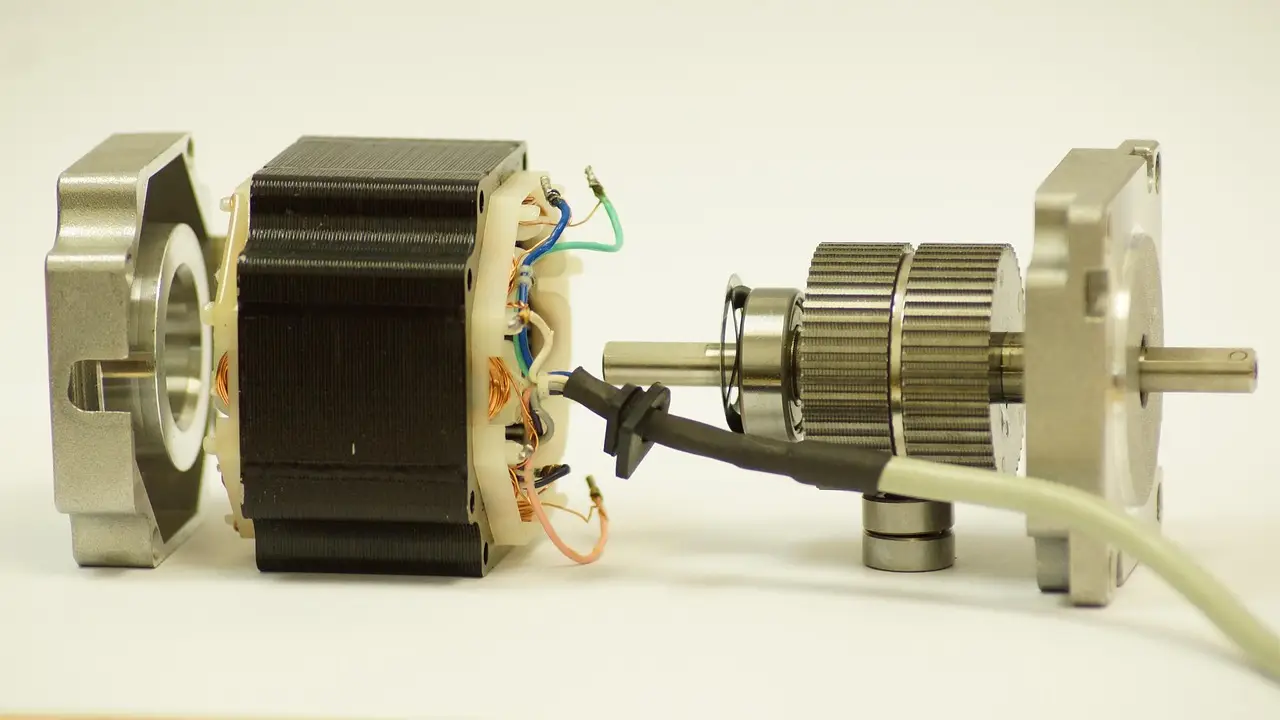
ZF says its new electric drive unit spins at up to 30,000 rpm — roughly 67% faster than the 18,000-rpm conventional benchmark it's measured against — and that the extra speed buys a near-25% cut in size and weight, plus a 50% reduction in magnet mass.
The German tier-one supplier calls the concept 'High Revolution Drive'. It's a compact 3-in-1 unit combining electric motor, power electronics and a two-stage transmission, and it targets the high-volume passenger car market with outputs of roughly 150 to 200 kW. The version ZF has shown delivers 200 kW peak output and 3,500 Nm of peak wheel torque. Production is targeted for 2030, and ZF says it is already in talks with several automakers. Note the verbs: talks, targeting, says. Nothing is booked yet.
How does more speed mean less motor?
The physics, as ZF describes it, is straightforward. At a given power output, higher rotational speed reduces the torque the motor must produce. Torque is closely tied to rotor volume, so the motor shrinks. To turn high speed back into usable twisting force at the wheels, a two-stage helical cylindrical gear transmission with a ratio of about 18:1 does the conversion.
The trade is magnets. Cutting required magnet mass by half lowers cost and, in ZF's words, reduces dependence on critical supply chains — a polite nod to rare-earth sourcing headaches every EV motor buyer currently shares.
Efficiency holds up, according to ZF: nearly 93%, on par with the comparable SELECT system running conventional speeds. The architecture scales across power ratings and supports both 400- and 800-volt systems.
What about the noise?
A motor turning at 30,000 rpm is an acoustic problem before it's a marketing asset. ZF says it handled noise and vibration by designing the motor, gearing, bearings and tooth geometry as one system rather than tuning parts in isolation.
"Robustness and low noise and vibration levels were stringent development targets from the outset," said Thomas Meiser, Head of the E-Mobility Business Unit at ZF. "To achieve this, we considered the electric motor, gearing, bearings and tooth geometry as an integrated system. For the configuration presented, 30,000 rpm is the economic and technical sweet spot."
The systems argument is Meiser's core pitch: "Rather than optimising individual components in isolation, we systematically coordinate the electric motor, power electronics and transmission," he said. "The High Revolution Drive draws on ZF's full systems expertise."
Why the SELECT platform matters
The new drive isn't a clean-sheet design. It's built as a variant of ZF's modular SELECT platform, using existing technologies. That matters commercially: automakers can carry it into new vehicles faster and at lower development cost, and ZF keeps product costs predictable while giving customers flexibility in how the drive is produced.
"With SELECT, we do not have to start from scratch for every new drive variant," said Meiser. "We use our modular system to tailor new concepts to different customer requirements."
There's a secondary benefit in the spec sheet. Less weight helps extend electric range — the one number every EV buyer checks first.
What to watch
The claim chain is now: 30,000 rpm, 200 kW, 3,500 Nm, 93% efficiency, half the magnets, 2030 production. The 18:1 ratio and the SELECT lineage make it manufacturable; the unanswered question is who signs.
Watch for a named OEM program — that's the milestone that turns a clever gearbox into a sourcing decision.
via just-auto (Source)
More from Daniel Okafor
Show full bio
Senior reporter covering regulation, policy and their impact on Automotive manufacturing and vehicle production at Autoplant Brief.
337 articles
Also circulated
- ZF's 30,000 rpm e-drive cuts weight and space by a quarter
- ZF's 30,000rpm drive halves magnet mass, cuts size by a quarter
- GAC's amorphous-stator motor wins top Geneva prize, adds 30–50 km
- Peak power density of EV motors up 45% since 2019, RWTH Aachen study finds
- Magna and ZF Bet Range Extenders Bridge the EV Transition Gap