ECO-7283 · REV D · effective November 11, 2026
EV Manufacturing TransitionRELEASEDEngineering notice
Peak power density of EV motors up 45% since 2019, RWTH Aachen study finds
RWTH Aachen benchmarking of 2019–2025 EV motors shows power density up nearly 45% to 2.43 kW/kg, with China, Europe and the US converging on architecture but diverging on materials.
Scope of change
- Peak power density of permanent magnet synchronous motors rose from 1.68 kW/kg (2019) to 2.43 kW/kg (2024–2025), up nearly 45%.
- Newer drivetrains increasingly run at 20,000 rpm or higher; some motors reach 30,500 rpm.
- Average gear ratio increased by roughly 21.5% over the study period.
- Chinese makers favour magnesium housings and powder-coated busbars; Europeans use aluminium and embedded copper-bar assemblies.
- Since 2022, highly integrated motor-transmission-electronics concepts have dominated the sample.
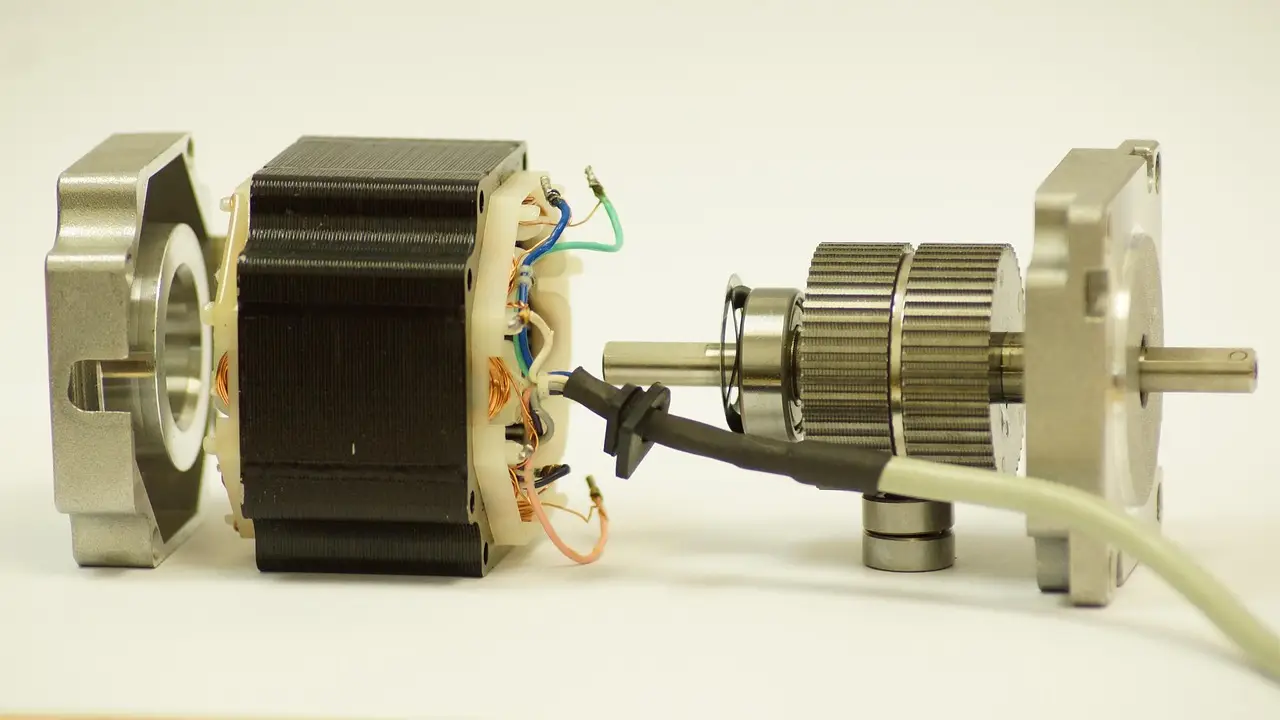
Electric motor peak power density rose from 1.68 kW/kg in 2019 to an average of 2.43 kW/kg for 2024–2025 models — a gain of nearly 45 per cent — according to a benchmarking study by the Chair of Production Engineering of E-Mobility Components (PEM) at RWTH Aachen University, published in the specialist journal Energies.
The study, titled Review and Benchmarking of Electric Motor Product Design and Manufacturing Technologies from the Chinese Market, examined electric motors from vehicles of model years 2019 to 2025. It centred on the Chinese market and was supplemented by comparative data on European and US drivetrains. For production planners and purchasing teams, the headline finding is reassuring: the three markets differ little in fundamental architecture.
That convergence covers housing structures, rotor and stator geometries, and the cooling concepts of newer models. The pronounced differences sit in materials and individual components — precisely the areas that affect sourcing decisions and tooling.
Where the markets actually diverge
Chinese manufacturers increasingly use magnesium alloys for motor housings, while European manufacturers more frequently opt for aluminium. The study also identifies a split in power distribution busbars (the conductive bars that carry current between components):
- Chinese manufacturers predominantly use powder-coated busbar solutions.
- European manufacturers tend to employ more complex assemblies, embedding multiple copper bars in a polymer component.
What does this change for European suppliers? It signals that competing with Chinese drivetrain makers on cost and weight is less about a different technology race and more about material and process choices — magnesium housings and simpler busbar designs are levers worth evaluating.
Speed is the power-density lever
Across all three markets, the study identifies a clear trend toward more compact, highly integrated drivetrain units. Since 2022, highly integrated concepts — where motor, transmission and power electronics are combined more closely — have dominated the examined sample.
The main driver behind the power-density gain is higher rotational speed. Between 2020 and 2022, maximum motor speeds clustered between 8,000 and 17,000 rpm. Newer drivetrains increasingly operate at 20,000 rpm or higher, with some motors reaching up to 30,500 rpm. In parallel, the average gear ratio rose by around 21.5 per cent over the period examined.
Higher speeds allow smaller rotor and stator diameters, which cuts material usage. The researchers caution, however, that higher speeds do not automatically produce more compact motors — in some cases, manufacturers use them to raise achievable vehicle speed instead.
Cooling shifts raise manufacturing demands
Cooling systems are also shifting. Older motors relied predominantly on classic water jackets, while newer drivetrains increasingly combine direct oil cooling for both the rotor and stator. The study notes this places higher demands on sealing and component manufacturing — a direct call on process engineering and quality control for Tier 1 suppliers (companies supplying OEMs directly).
The study's overall verdict: China is an important driver for electric drivetrains, but no fundamentally different technical direction has emerged compared with Europe or the USA. The differences lie in specific implementation and material choices, not in a divergent architectural path.
For manufacturing practitioners, the near-term items to watch are the pace of oil-cooling adoption and its sealing requirements, whether magnesium housings spread beyond Chinese plants, and whether average motor speeds push past the 30,000 rpm mark in the next model cycle.
via electrive (Source)
More from Marcus Bennett
Show full bio
News editor covering regulation, policy and their impact on Automotive manufacturing and vehicle production at Autoplant Brief.
293 articles
Also circulated
- GAC's amorphous-stator motor wins top Geneva prize, adds 30–50 km
- Chinese carmakers are piling pressure on UK rivals, industry chief says
- MG Targets Spain for New EV Manufacturing Plant
- Xiaomi Registers New Subsidiary for EV Battery Powertrain Production
- Rare-earth-free motor program AEM adds another development partner