ECO-5857 · REV L · effective October 13, 2026
EV Manufacturing TransitionRELEASEDEngineering notice
Xpeng Confirms European EV Production Push; Capacity, Site, Timing Still Pending
Xpeng Inc. has confirmed plans to expand electric-vehicle production in Europe, but plant location, capacity, investment value, and start-of-production date remain undisclosed, leaving the announcement as direction rather than confirmed capacity.
Scope of change
- Xpeng Inc. has publicly stated intent to expand EV production in Europe, per Fuel Cells Works.
- No plant location, annual capacity target, investment figure, job count, or start-of-production date was disclosed in the announcement.
- The EU finalized countervailing duties on Chinese-built EVs in 2024, raising landed costs for imported models and strengthening the case for local assembly.
- Hungary and Spain are among the European jurisdictions publicly courting Chinese-OEM EV investment.
- Practitioners should watch for a site-selection or contract-manufacturing partner announcement as the next material disclosure.
By Marcus Bennett
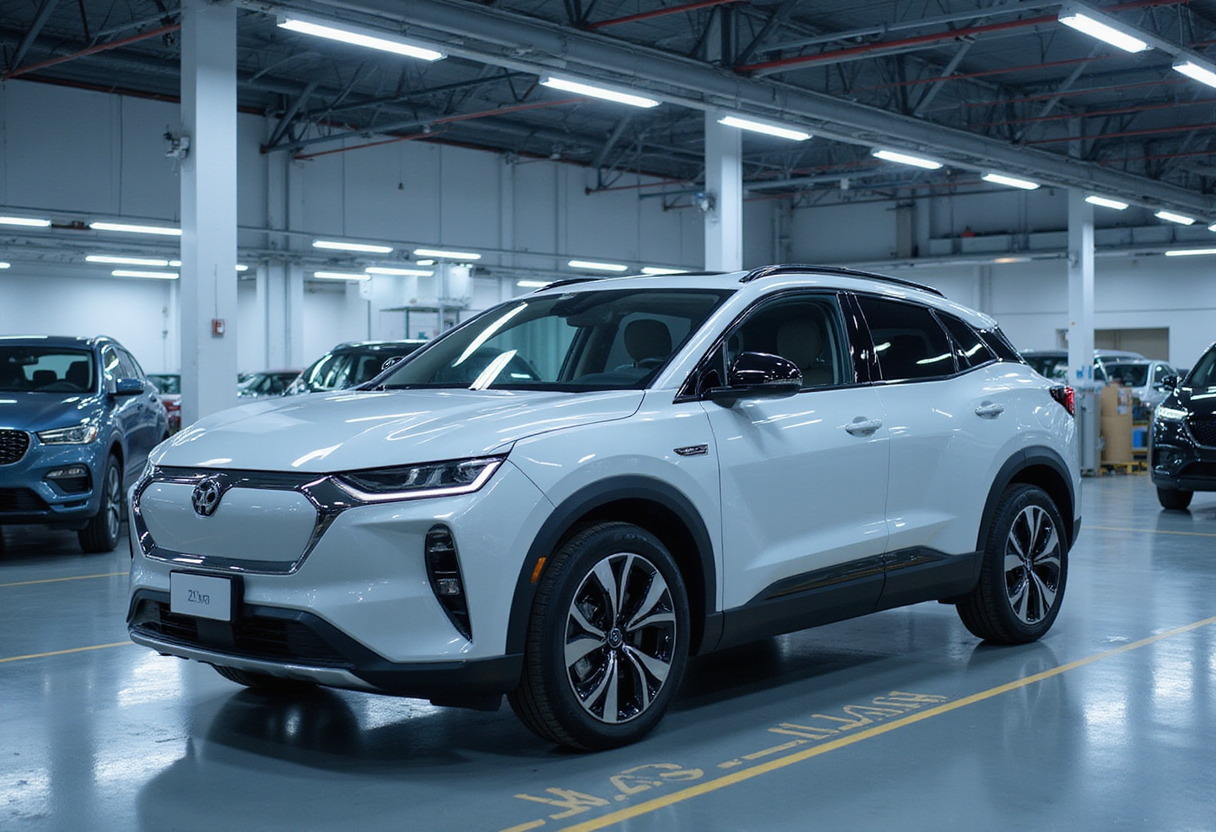
Xpeng Inc., the Guangzhou-based electric-vehicle manufacturer, has publicly stated its intention to expand electric-vehicle production in Europe, according to a Fuel Cells Works report. The automaker has not disclosed a plant location, annual capacity target, capital-investment figure, job count, or start-of-production date alongside the announcement.
The development follows a year in which Chinese OEMs have accelerated their European industrial footprint debate, driven in part by EU trade measures on Chinese-built EVs. Local production would, in principle, allow Xpeng to bypass tariff exposure and qualify for incentives tied to European content.
What does the Xpeng move actually change for European suppliers?
For Tier 1s with EV platform programs, a confirmed European Xpeng plant represents a new customer opportunity worth pursuing. Tier 2 suppliers in battery modules, electric drive units (the motor-and-transmission assembly that propels an EV), and power electronics should expect eventual sourcing requests. Until Xpeng names a site and a manufacturing partner, however, the announcement functions as a procurement signal rather than a confirmed order book.
What capacity could be involved?
The reported announcement contains no volume figure. Xpeng has historically scaled Chinese facilities across multiple sites; the company has not indicated whether the European operation would mirror that scale or begin at a smaller capacity envelope typical of an entry-market plant. Practitioners should treat any specific volume number as unconfirmed until Xpeng publishes one.
Which European plant locations are plausible?
Hungary and Spain have hosted recent Chinese-OEM activity and continue to court EV investment. Hungary benefits from an existing supplier cluster and active government incentives; Spain offers recovery-fund programs tied to battery and EV manufacturing. Until Xpeng confirms a country, region, or partner site, location remains speculative.
How does the EU tariff environment shape the decision?
The European Commission's countervailing duties (import taxes designed to offset government subsidies in the exporting country) on Chinese-built EVs, finalized in 2024, materially raised landed costs for imported models. Local assembly changes that math by reclassifying vehicles as European-built for tariff purposes and by opening access to subsidy programs with local-content thresholds. The strategic logic of a European Xpeng plant strengthens as tariff exposure deepens.
What should supply-chain practitioners watch next?
- A site-selection or country announcement, which industry contacts expect within months rather than quarters
- A contract-manufacturing partner name, possibly drawn from an assembler already active in Xpeng's European footprint
- An investment figure and headcount target, typically disclosed alongside public subsidy packages
- A start-of-production date tied to a specific model line
For supplier account teams, the immediate action is limited: confirm whether procurement outreach has reached your organization, and benchmark Xpeng's existing Chinese-sourced bill of materials (the consolidated component and sub-assembly list for a given vehicle) to identify where European local supply could displace imports once a plant is named.
The bottom line
Xpeng's stated intent registers as direction, not capacity. It joins a broader Chinese-OEM push into European manufacturing that now includes BYD's Hungary plant and SAIC's reported European ambitions. Until Xpeng converts intent into disclosed numbers, names, and dates, the announcement is a marker to track rather than a program to quote.
Suppliers and competitors will read this confirmation as a signal that the European industrial question is moving from "if" to "when" for Xpeng. The next concrete disclosure will determine whether the project becomes a real capacity event for the European supply base.
via Google News: Auto plant and vehicle production (Source)
More from Marcus Bennett
Show full bio
News editor covering regulation, policy and their impact on Automotive manufacturing and vehicle production at Autoplant Brief.
188 articles
Also circulated
- XPeng in Talks With Overseas Automakers on Production Expansion
- Xpeng acquires 90.1% stake in Erajaya's EV manufacturing arm
- SAIC Targets Spain for Its First European EV Assembly Plant
- Brussels Links UK Access to 'Made in Europe' Plan to China EV Tariffs
- VW opens pre-sales for ID. UNYX 09 at 199,900 yuan in China