ECO-8811 · REV Z · effective September 30, 2026
Automation & RoboticsRELEASEDEngineering notice
Xiaomi Puts Humanoid Robots to Work on EV Production Line
Xiaomi is trialing humanoid robots on its EV production line in Beijing, one of the first such deployments inside a Chinese automotive assembly plant. Scope and robot counts remain undisclosed.
Scope of change
- Xiaomi is testing humanoid robots on an EV production line at its automotive factory, Robotics & Automation News reports.
- The company opened its own auto plant in Beijing's Economic and Technological Development Zone and launched the SU7 electric sedan in 2024.
- Robot model, unit counts and task scope of the trial remain undisclosed; the program is a test, not a confirmed scaled deployment.
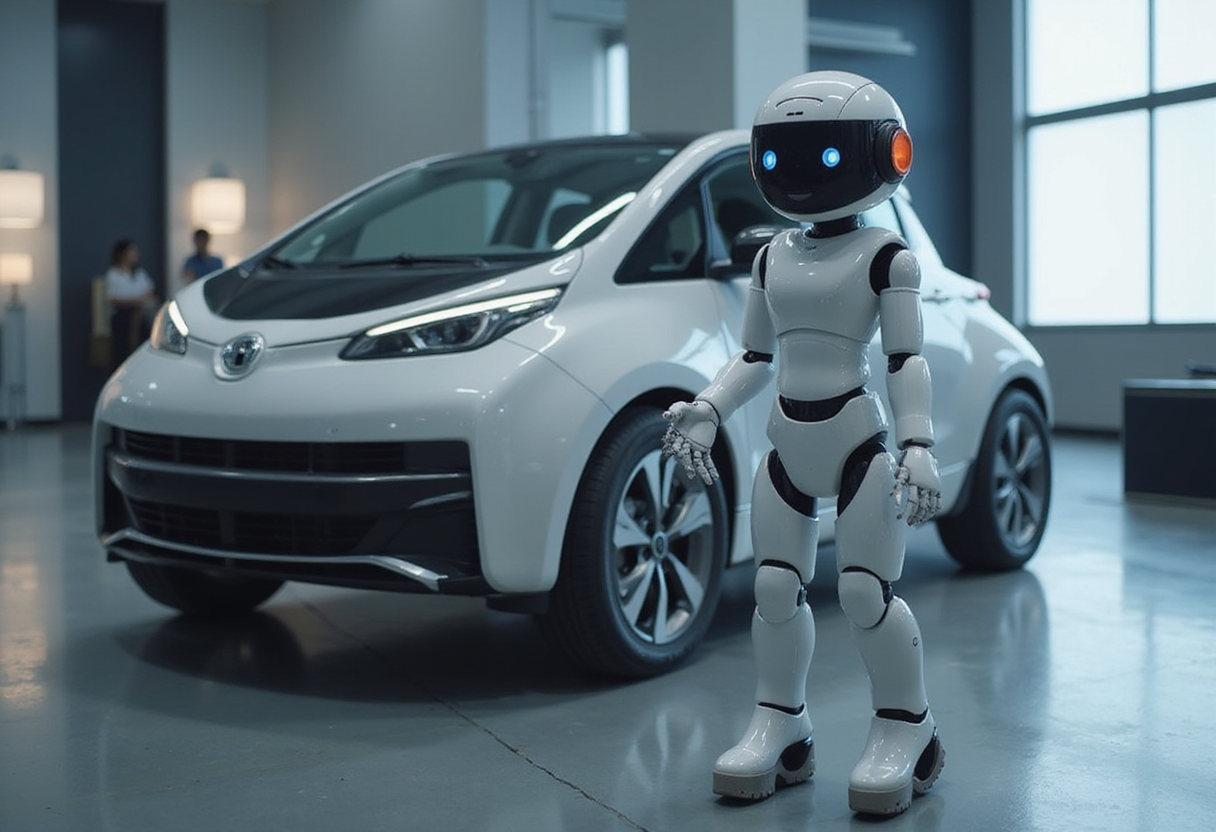
Xiaomi is testing humanoid robots on an electric vehicle production line at its automotive factory, according to a report from Robotics & Automation News. The trial marks one of the first confirmed cases of a Chinese automaker deploying general-purpose humanoid machines directly inside an EV assembly environment rather than in a lab or warehouse setting.
The Beijing-based company, better known as a smartphone and consumer electronics maker, entered vehicle manufacturing in 2024 with the launch of its SU7 electric sedan. Since then it has operated its own automotive plant in the Beijing Economic and Technological Development Zone, building vehicles in-house rather than outsourcing production to a contract manufacturer.
Details of the trial remain limited. The report does not specify how many robots Xiaomi has deployed, which production stations they are working at, or whether the machines are performing actual manufacturing tasks or running supervised validation exercises alongside the line. It also does not identify the specific robot model in use.
Xiaomi has form in humanoid robotics. The company unveiled its CyberOne humanoid prototype in 2022, a 177 cm, 52 kg machine it developed internally. It has not previously disclosed any industrial deployment of the platform, and the automaker has made no public statement confirming production volumes or targets for robots on the line.
The distinction matters. Automakers including BMW, Mercedes-Benz and Tesla have all announced or demonstrated humanoid robots in factory settings over the past two years, but in most cases these remain pilot programs — staged trials with a handful of units from suppliers such as Figure AI and Apptronik — rather than confirmed, scaled deployments with defined cycle times and takt integration. Xiaomi's trial, as reported, sits in the same category: an announced test, not a verified production process change.
For Xiaomi specifically, the move fits its broader vertical-integration strategy. The company designs its own chips, operates its own HyperOS software stack across phones, vehicles and home devices, and builds its own cars. In-house humanoid robots on the production line would extend that pattern from product into process.
It also fits the economics of the moment. Chinese EV manufacturing runs on thin margins and high line speeds, and labor availability at scale is a growing constraint as new plants come online across the country. Humanoid robots — still unproven in terms of unit cost, uptime and cycle-time reliability against purpose-built industrial arms — are a bet that general-purpose machines can eventually handle varied tasks on fast-moving lines without bespoke fixturing.
That bet is not yet settled. Traditional six-axis industrial arms and collaborative robots already handle welding, painting and material handling at high repeatability and falling cost. Humanoids must beat that installed base on total cost per task, not just on novelty, before any OEM commits production volume to them.
Xiaomi has not disclosed a timeline for expanding the trial, a target number of robots on the line, or any capacity effect the program could have on its Beijing plant. The company has previously said it is expanding vehicle production capacity to meet SU7 demand, with a second model, the YU7 SUV, entering the lineup in 2025.
What to watch next: whether Xiaomi confirms the robot model and task scope of the trial, whether the program moves from validation exercises to integrated production stations with published cycle times, and how quickly the Beijing plant's output scales as the YU7 launch adds volume pressure to the line.
via Google News: Automotive assembly automation (Source)
More from Amara Osei
Also circulated
- Dongfeng to trial-produce humanoid robots by year-end, targets human-level capability by end of 2027
- Humanoid robots reach BMW's European production lines
- Agility Humanoid Robots Enter Toyota's Production Operations
- Toyota Plans Humanoid Robot Deployment at Canadian Plant
- Humanoid robots reach factory floors at BMW, Tesla and Mercedes