ECO-6063 · REV H · effective October 16, 2026
Auto Industry PolicyRELEASEDEngineering notice
Trump's Canadian Auto Tariff Threat Puts US Plants in Crosshairs
Trump threatens new Canadian auto tariffs in a move WKOW says will hurt US automakers and workers, exposing the integrated North American supply chain to fresh disruption.
Scope of change
- Trump is threatening new tariffs on Canadian automobiles, per WKOW headline
- US and Canadian auto sectors operate as one integrated production system with parts crossing the border repeatedly
- Trump has already imposed 25% duties on imported vehicles and key parts under existing authority
- USMCA's regional value content rules require approximately 75% North American content for preferential treatment
- Canadian officials have signaled retaliation against any new US tariff regime
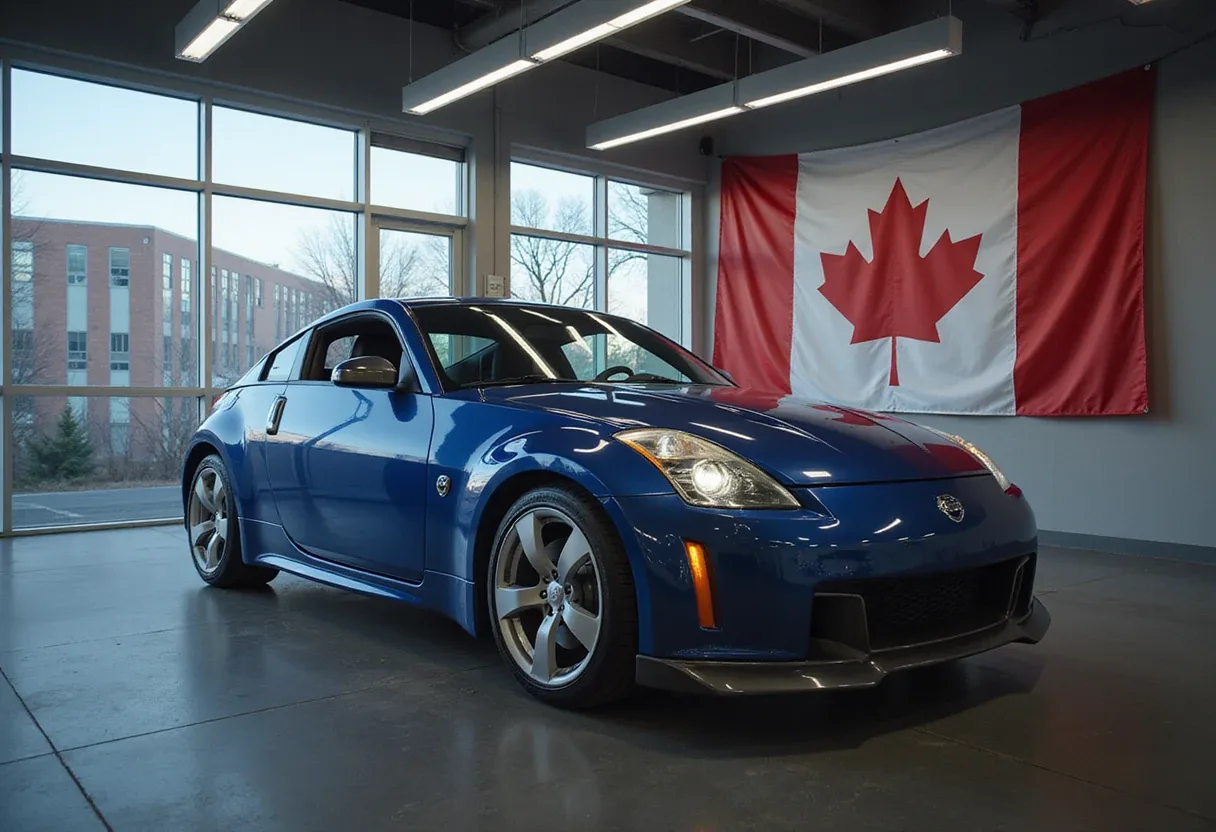
President Donald Trump is threatening new tariffs on Canadian automobiles, according to a WKOW headline that warns bluntly: "That will hurt US automakers and workers."
The threat is a headline, not yet a policy. No tariff rate, no effective date, no vehicle category list confirmed publicly. Trump's pattern, though, suggests action often follows words. What does this change for US plants? That could reshape how the entire network operates.
Why the supply chain is exposed
The US and Canadian auto sectors run as one integrated production system. A transmission casting in Ontario may cross into a Detroit-area plant, return north for sub-assembly, then re-enter the US for final fitment — all before a single vehicle is complete. Tariffs layered onto that flow hit every handoff.
Detroit's Big Three — General Motors, Ford, and Stellantis — depend on this borderless architecture. Their Ontario assembly plants feed US dealers. Their US plants pull parts from Canadian suppliers. Any new levy ripples both ways.
The supply chain runs deep into Tier 1 (first-tier, direct to OEM) and Tier 2 (second-tier, supplier to Tier 1) makers. A Canadian steel coil becomes a stamping, becomes a body panel, becomes a chassis. Add duty at any point and the cost compounds.
WKOW's framing points at the downstream effect: higher vehicle prices, compressed margins, potential production cuts. Workers at US assembly plants face reduced output if Canadian inputs become uneconomic.
Not the first round
Trump has already imposed 25% duties on imported vehicles and key parts under existing authority. A Canadian-specific tariff stacks on top. The arithmetic turns ugly fast.
The USMCA (United States-Mexico-Canada Agreement) framework complicates any blanket action. Vehicles meeting the agreement's regional value content rules — typically 75% North American content — enjoy preferential treatment. A new tariff regime must define how it interacts with those existing duty structures. That detail matters for OEM planning.
Workers inside US assembly plants already feel pressure from the existing regime. Some facilities have idled shifts. Suppliers have absorbed margin compression. A Canadian-specific layer accelerates a trend already in motion.
Politics and retaliation risk
The political backdrop shapes timing. Trump has used tariff threats as negotiating leverage throughout his second term. Canada remains a key US trade partner. Bilateral goods trade runs north of $700 billion annually. Automotive products constitute a meaningful share of that flow.
Canadian officials have signaled they will retaliate. Retaliatory tariffs typically target politically sensitive US exports — agricultural products, manufactured goods. The auto sector could see reciprocal duties on US-made vehicles exported north, hitting export-dependent Detroit models directly.
Industry groups will weigh in quickly. The American Automotive Policy Council, the Alliance for Automotive Innovation, and the Canadian Vehicle Manufacturers' Association have all opposed previous tariff rounds. Coordinated pushback should be expected.
What it means on the line
Models assembled in Ontario for US sale — certain Ford crossovers, Stellantis minivans, and specific GM trucks among them — sit in the line of fire. Pricing pressure on these nameplates feeds directly into showroom sticker shock.
What to watch next
The formal announcement, if it comes, will set the timeline. The percentage rate Trump names, the categories covered, and any carve-outs for USMCA-compliant content will determine severity. Plant-by-plant exposure analyses from the Big Three will follow within days of any formal action. The launch date of any new tariff regime, and the exemption list, will decide how badly US production lines absorb the shock.
via Google News: Auto industry policy (Source)
More from Grace Kim
Show full bio
Staff writer covering people, launches and day-to-day practice in Automotive manufacturing and vehicle production at Autoplant Brief.
184 articles
Also circulated
- New Canadian Auto Tariff Threat Puts US Automakers in Crossfire
- Trump Threatens 50% Tariff on Canadian Vehicles and Parts
- 50% Canada Tariff Threat Rattles Michigan Auto Plants Near Detroit
- Canadian Auto Sector Braces as Trump Floats New Tariff Threats
- Trump Threatens Higher Auto Tariffs as US-Canada Trade Fight Escalates