ECO-5687 · REV H · effective October 10, 2026
Vehicle Plants & ProductionRELEASEDEngineering notice
Toyota and Nissan Suspend Vehicle Production in Japan
Toyota and Nissan have suspended vehicle production across their Japanese plants, halting output simultaneously at two of Japan's three largest automakers and prompting supplier scheduling questions.
Scope of change
- Toyota and Nissan both confirmed suspension of vehicle production in Japan on the same day
- The stoppage affects every Japanese assembly plant operated by either OEM, per the source
- Japan's domestic auto industry is anchored by three manufacturers: Toyota, Nissan and Honda
- Neither OEM has yet disclosed which plants are offline or how long the suspension will last
- The two companies have not publicly identified the cause of the stoppage
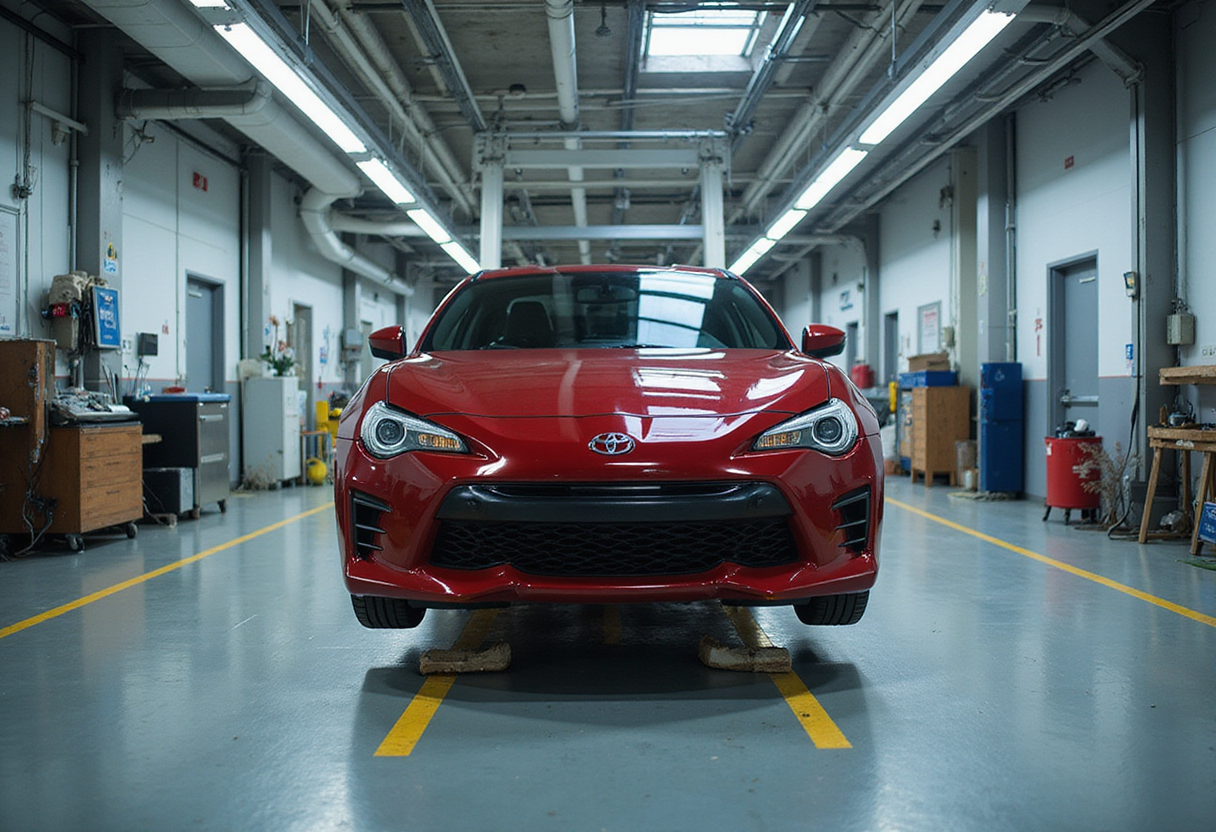
Toyota and Nissan have suspended vehicle production at their Japanese plants, halting assembly lines at two of the country's three largest automakers on the same day.
The decision affects every assembly facility operated by Toyota Motor Corp. and Nissan Motor Co. within Japan, though the automakers have not yet disclosed which plants are offline, how long the stoppage will last, or the production volume at risk. Both companies confirmed the suspension through separate announcements reported by AOL.com.
How significant is a simultaneous Toyota-Nissan halt?
Japan's domestic auto industry revolves around three manufacturers: Toyota, Nissan and Honda Motor Co. When two of the three suspend output on the same day, the ripple effects extend well beyond the assembly hall. Tier-1 suppliers feeding stamping, powertrain and electronics components into both OEMs' plants face immediate scheduling questions about deliveries already in transit.
For Toyota, any Japanese output suspension cuts into the backbone of its global volume strategy. The company has historically built roughly a third of its worldwide unit output inside Japan, with plants in Aichi, Miyagi and Fukuoka prefectures handling core models including the Corolla, RAV4 and Lexus sedans.
Nissan's Japanese footprint centers on its Oppama plant in Yokohama, the Tochigi assembly complex, and powertrain operations in Fukushima. The company's domestic volumes have been under pressure for several quarters amid a broader restructuring announced by management, making any additional production interruption a more delicate issue for the supplier base.
What triggered the stoppage?
Neither Toyota nor Nissan has publicly identified a cause as of this writing. Production suspensions at Japanese OEMs typically trace to one of three categories: a parts shortage from a Tier-1 or Tier-2 supplier, an information-technology or production-control software failure, or a quality defect requiring a manufacturing pause while containment steps are taken.
How are tier suppliers affected?
Suppliers with dual exposure to both Toyota and Nissan — including Denso, Aisin, Toyota Industries and Nissan's keiretsu partners — face the most immediate scheduling impact. Any Japanese stoppage typically ripples outward within seven to ten days to overseas assembly operations, depending on the parts categories affected and the inventory position of each supplier.
The announcement provides no indication yet whether North American, European or Chinese plants operated by either OEM are affected. Toyota and Nissan both maintain large assembly operations in the United States, Mexico, the United Kingdom and Thailand.
What to watch next
Three data points will determine the scale of this event:
- Restart timing. The first concrete signal will be a confirmed restart date from either OEM. Toyota and Nissan historically issue brief production notices within 24 to 48 hours of an unscheduled stoppage.
- Affected model list. A line-by-line disclosure of which nameplates are paused will clarify whether the disruption is narrow (a single platform) or broad (multiple vehicle programs).
- Supplier cascade. Tier-1 confirmation of parts shortages, software failures or quality holds will identify the upstream trigger and reveal whether the two stoppages share a common cause.
Autoplant Brief will update this story with named facilities, model exposure and confirmed restart dates as the OEMs disclose them.
via Google News: Auto plant and vehicle production (Source)
More from Marcus Bennett
Show full bio
News editor covering marketplaces and e-commerce at Autoplant Brief.
154 articles