ECO-4872 · REV I · effective October 30, 2026
EV Manufacturing TransitionAPPROVEDEngineering notice
Stellantis sets 2028 E-Cars target; Opel Agila remains unconfirmed
Stellantis plans three small electric cars for 2028 at Pomigliano d’Arco near Naples. Quattroruote says one could be an Opel Agila, but neither Opel nor Stellantis confirms name, timing or price.
Scope of change
- Stellantis announced E-Cars in May 2026 and plans three small electric vehicles for 2028 at Pomigliano d’Arco near Naples.
- Citroën’s 2CV reinterpretation and Fiat’s expected Koala are scheduled for 2028; an Opel variant may follow.
- The Agila was offered from 2000 to 2014; its first generation was based on the Suzuki Wagon R+ and its second on the Suzuki Splash.
- The reported Opel is around four metres and would fit the proposed M1E class for small electric cars under 4.20 metres.
- The E-Cars family price target is around €15,000, but Stellantis has not confirmed model-level pricing.
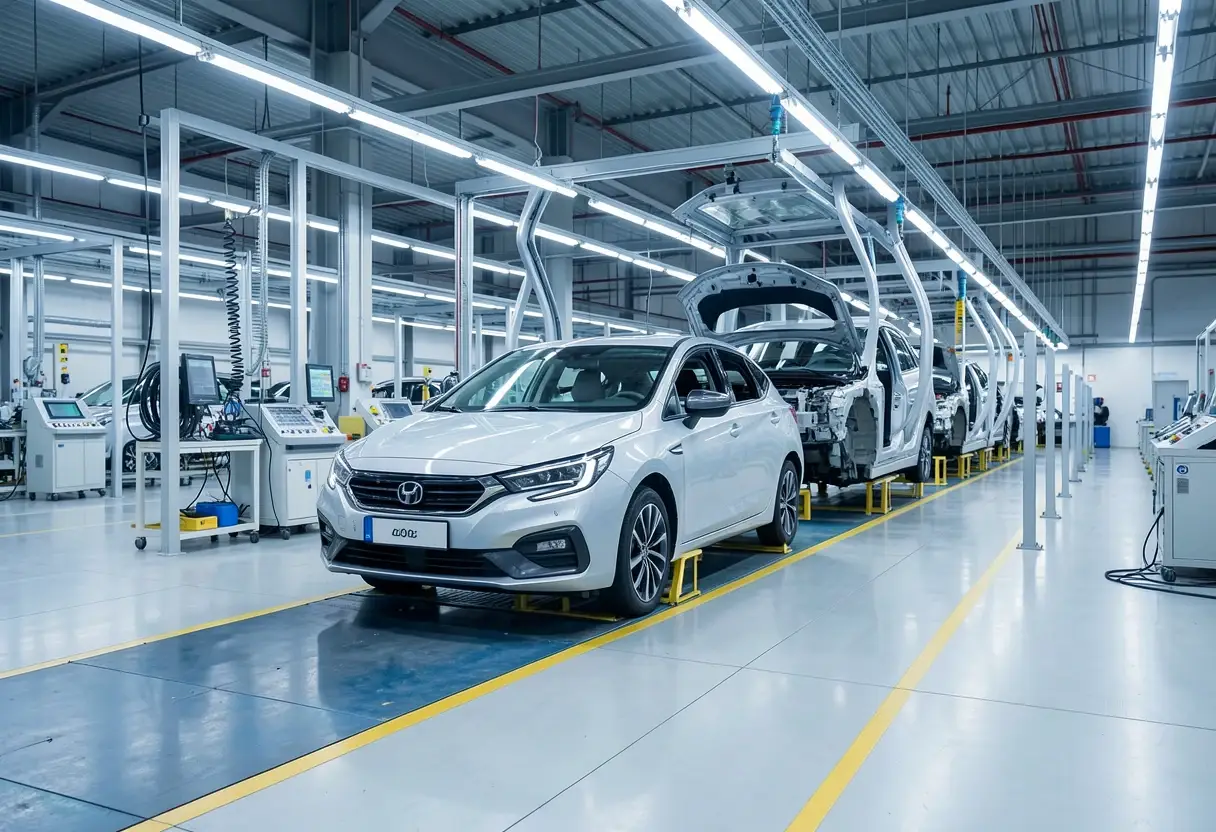
Stellantis plans three small battery-electric cars for 2028 at its Pomigliano d’Arco plant near Naples. Opel has not confirmed an Agila or its place in the program.
Italian automotive magazine Quattroruote reports that Rüsselsheim-based Opel could join Stellantis’s Citroën and Fiat brands in the entry-level segment on the same technical platform (the common vehicle architecture), arriving a few months after those sister models. Quattroruote identifies Agila as the likely name; neither Opel nor Stellantis has officially confirmed that name or launch sequence.
What has Stellantis confirmed?
Stellantis announced the E-Cars project in May 2026. It says the cars will be developed and produced in Europe for the European market. Stellantis describes the “E” as “European, emotional, electric, and eco-friendly.”
The company frames the family as a response to the shrinking selection of affordable city cars in Europe and broader access to electric mobility. Stellantis says selected partners will develop the electric-car technology to reduce costs and accelerate the market launch.
Stellantis designated Pomigliano d’Arco, near Naples, as the production site; Fiat produces the Panda and other models there. The group expects the first E-Cars to roll off the line in 2028 and reaffirmed in September that three small electric cars would come from the Italian plant. It has not disclosed an annual capacity figure for the new family.
No Tier 1 supplier, meaning a company that supplies components directly to an automaker, appears in the report. Nor has Stellantis named a battery supplier. That leaves production scale and technology costs unverified ahead of the 2028 start.
What are the three planned models?
- Citroën will lead the family with an electric reinterpretation of the 2CV, the car nicknamed the “Duck”; a corresponding concept was unveiled at the Paris Motor Show.
- Fiat is developing a related electric city car expected to be called the Koala; both models are scheduled to reach the market in 2028.
- The Opel version could follow a few months later, according to Quattroruote, but Opel has not confirmed either the model or the Agila name.
Could the Opel revive the Agila?
The Agila name ran from 2000 to 2014 on a compact high-roof city car, also described as a microvan. The first generation was based on the Suzuki Wagon R+, while the second was derived from the Suzuki Splash. Those historical relationships do not establish Suzuki’s role in E-Cars.
Quattroruote considers a practical, tall body plausible, allowing short overhangs and a comparatively spacious interior. At around four metres, the reported Opel would fall within the proposed M1E limit of 4.20 metres.
What does the M1E proposal change?
The European Commission intends to introduce M1E, a class for small electric cars under 4.20 metres, through its Auto Package. In future CO₂ fleet-emissions calculations (each group’s fleetwide regulatory total), qualifying cars receive a 1.3 factor as a “Super Credit.” The policy is designed to give automakers an incentive to build smaller electric cars.
What remains unknown about price and specifications?
No reliable details have emerged for performance, battery capacity or electric range. Quattroruote expects those figures to follow the cost and size limits of the entry segment, but presents that as a segment-based inference rather than a disclosed specification. A simple equipment level and a functional interior concept remain conceivable ways to reach the lowest entry price.
The stated target for the E-Cars family is around €15,000. Stellantis has not confirmed that figure as a binding list price for each model, including the reported Opel. It remains a family-level ambition rather than an announced Agila price.
What should the industry watch?\n
- An official Opel or Stellantis announcement with the model name and a 2028 launch date, including its position after the Citroën and Fiat launches.
- The 2028 production start at Pomigliano d’Arco, including any disclosed annual capacity and production ramp rate.
- The European Commission’s final adoption of M1E and its 1.3 Super Credit treatment under the Auto Package.
Until those items are documented, Agila remains a trade-press projection rather than a confirmed Opel program. Naming and production evidence would establish a defined vehicle program beyond the current report.
via quattroruote.it (Original)
More from Sophie Lindqvist
Show full bio
Correspondent covering money, funding and market shifts around Automotive manufacturing and vehicle production at Autoplant Brief.
273 articles
Also circulated
- Stellantis commits €1B+ to French EV plant, 2029 start
- Stellantis to idle four French plants in October
- Stellantis, Leapmotor to build EVs at Madrid and Zaragoza from 2028
- ECU shortage cuts Fiat output in Italy, first monthly sales dip of 2026
- Stellantis Halts EV Output at Three French Plants on ACC Battery Shortages