Effective October 30, 2026
Production TechnologyEngineering notice
SPAD Sensors Push Machine Vision Toward 57,000 fps and 140 dB
Photon-counting SPAD cameras from Pi Imaging and Canon promise 57,000 fps capture and 140 dB dynamic range, moving image formation from sensor hardware into computational reconstruction.
Scope of change
- Pi Imaging's SPAD Alpha captures photon counts at up to 57,000 fps on a 1,024-by-1,024-pixel sensor.
- Computational reconstruction can yield video streams at 1,000 fps with more than 140 dB dynamic range per frame.
- Canon has developed a 2.1-megapixel SPAD sensor architecture for imaging applications.
- SPAD sensors detect individual photon arrivals rather than accumulating charge like conventional CMOS sensors.
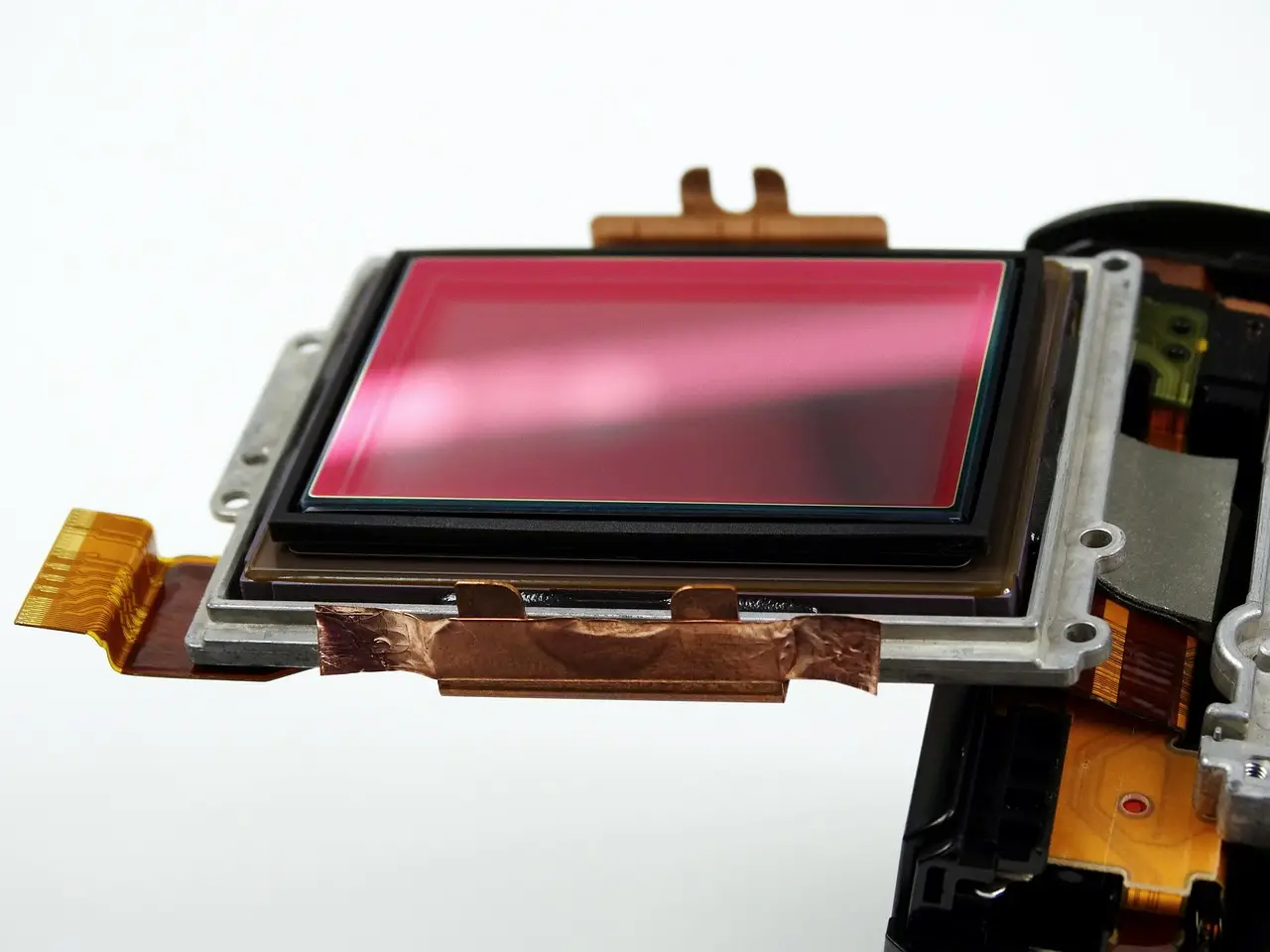
A photon-counting camera can capture up to 57,000 frames per second with a 1,024-by-1,024-pixel sensor — and deliver more than 140 dB of dynamic range per frame once computational reconstruction is applied. That performance envelope, impossible for today's conventional CMOS cameras, is what sensor makers are now bringing to machine vision.
The shift targets the foundation of industrial imaging. Virtually all machine vision cameras today use sensors that accumulate electrical charge from incoming photons during an exposure, then measure that charge and convert it to a digital value. Decades of refinement have made modern CMOS sensors exceptionally capable across industrial applications. Robot guidance, assembly verification, warehouse automation, object detection and most inspection tasks still rely on visible-light images that closely resemble what a human operator would see — and the machine learning models now deployed across industry were trained on exactly those images.
Photon-counting sensors work differently. Instead of measuring accumulated charge, they detect individual photon arrivals and record those detections directly. The leading implementation is the single-photon avalanche diode (SPAD): when a photon hits a SPAD pixel, it triggers an avalanche event detected digitally, registering a single photon's arrival.
Where the hardware stands
SPAD devices have served for years in lidar and time-of-flight systems, where precise photon timing matters. Sensor manufacturers have now begun building larger arrays designed specifically for imaging. Two recent examples:
- Pi Imaging's SPAD Alpha: a photon-counting camera with a 1,024-by-1,024-pixel sensor, supporting photon counting at up to 57,000 fps.
- Canon's SPAD architecture: a 2.1-megapixel sensor built on the same photon-counting principle.
The key architectural difference is what happens after capture. Because photon-counting systems retain information about individual photon detections, measurements from many observations can be combined computationally before a final image is produced. Reconstruction algorithms can incorporate information collected across time — including estimates of scene motion — rather than relying on a single exposure that must balance motion blur against signal quality.
What does this change for the plant floor?
Two scenarios show the practical value. First, mobile robots in warehouses: the robot moves, nearby objects move, and illumination varies continuously as it traverses the facility. A conventional camera must form an image from one exposure under all those constraints. Photon-counting architectures let image formation draw on measurements collected over time, with motion estimates built into the reconstruction.
Second, high-speed manufacturing. Electronics assemblies, machined components and metallic packaging often contain intense specular reflections and comparatively dark features in the same scene. Critical defects may sit immediately adjacent to bright reflections — hard to capture reliably in a single exposure. Conventional high-dynamic-range processing combines multiple exposures, but it can introduce artifacts when parts move fast. Photon-counting preserves information that conventional image formation discards, giving reconstruction algorithms room to recover detail across a wider range of scene intensities. The result is not simply a better image, but potentially more reliable inspection and measurement in challenging production environments.
Why architecture matters more than specs
The most significant aspect of photon-counting imaging may not be sensitivity, frame rate or dynamic range. The fundamental change is that image formation is no longer determined entirely by the sensor. Computation now plays a direct role in how images are formed. Historically, engineers tuned sensors, optics, illumination and exposure settings to produce the best possible image before analysis began. Photon counting adds a new variable: the reconstruction process itself.
Will it go mainstream? Uncertain. Conventional CMOS sensors continue to improve and will remain the dominant imaging technology for most industrial applications. But recent SPAD advances suggest photon counting is becoming practical beyond its traditional roles in ranging and depth sensing.
For automation engineers, the takeaway is architectural. Past performance gains in machine vision came from better sensors or better algorithms. Photon-counting suggests image formation itself is becoming a distinct arena for innovation — as sensing and computation couple more tightly, future gains may come from new approaches to how images are formed in the first place.
via ubicept.com (Original)
More from Grace Kim
Show full bio
Staff writer covering people, launches and day-to-day practice in Automotive manufacturing and vehicle production at Autoplant Brief.
309 articles
Also circulated
- Kistler says system inspects 4,000 punched metal parts per minute
- ABB Claims AI Robot Trainer Cuts Commissioning Time by Up to 90%
- Valeo Bets on QNX Software for Smart Camera Push in China
- AMS labels Gocator 3D sensor tech 'game-changing' for EV plants
- Seeing Machines lands $31 million programme expansion with European carmaker