ECO-3207 · REV V · effective November 6, 2026
Production TechnologyRELEASEDEngineering notice
Only 20% Say Systems Very Accurately Reflect Shift Reality
Relay's survey of 500 U.S. manufacturing professionals finds only 20% say formal systems reflect actual shift events, while 78% report recurring delays, rework and stopped production.
Scope of change
- Only 20% of 500 surveyed U.S. manufacturing professionals say formal systems very accurately reflect a typical shift.
- 57% rely on in-person conversations for critical operational information, compared with 36% using formal systems.
- 82% say employees manually carry information between teams, systems or shifts; 78% report communication-related production disruptions.
- 83% of executives expect highly automated facilities to identify problems quickly, compared with 35% of frontline workers.
- 75% worry about critical knowledge loss from retirements and turnover, but only 23% have formal preservation programs.
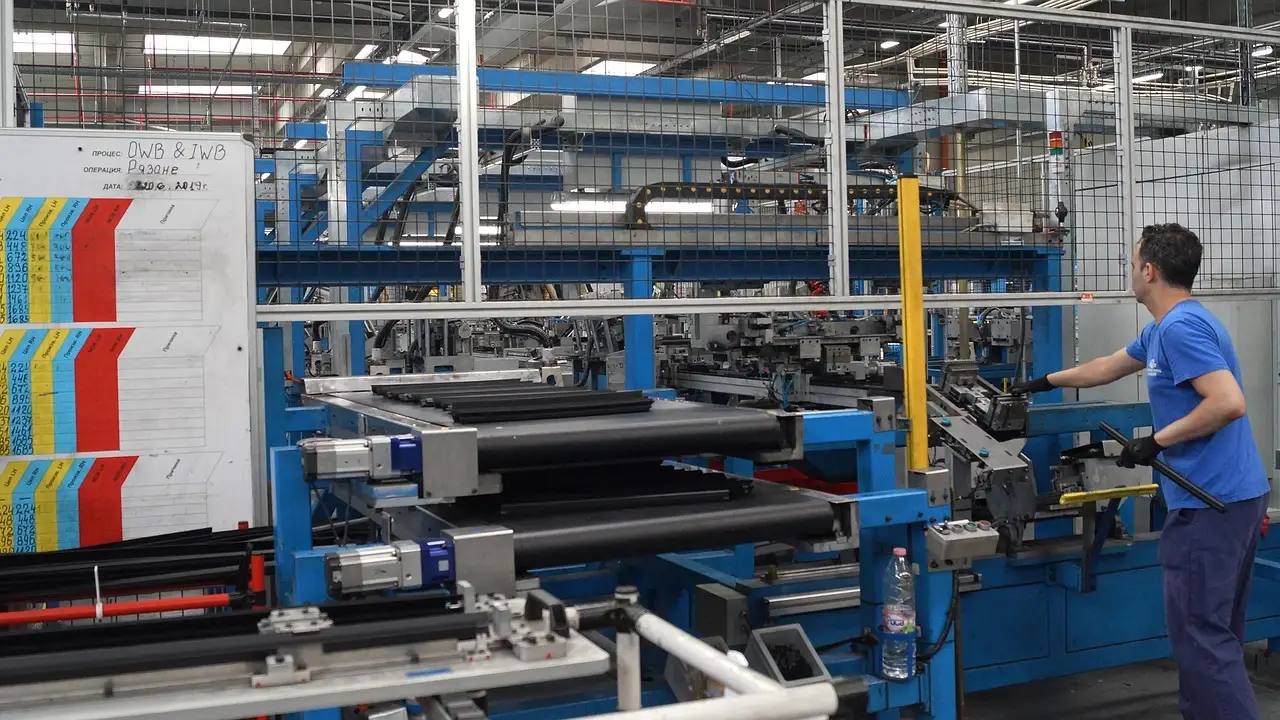
Only 20% of manufacturing professionals say their formal systems very accurately reflect what actually happened during a typical shift, according to Relay’s survey of 500 U.S. manufacturing professionals.
Another 40% said only some of what frontline workers discuss informally reaches a system, log or formal report. For critical operational information, 57% still rely on in-person conversations, compared with 36% who cite formal systems such as computerized maintenance management systems (CMMS), enterprise resource planning (ERP) and ticketing platforms.
Relay also reports that “employees still manually carry information between teams, systems or shifts.” Eighty-two percent of respondents said the same, making informal handoffs a routine operating practice rather than an isolated workaround.
How does the communication gap affect production?
Seventy-eight percent of respondents said communication breakdowns cause delays, rework, missed handoffs or stopped production at least a few times a month. That frequency turns information transfer into a measurable production variable rather than a back-office concern.
The survey does not identify specific plants, original equipment manufacturers (OEMs) or supplier tiers, so it does not rank the problem by vehicle program, plant or production volume. Its value is organizational: it shows how widely manufacturing teams experience the same mismatch between recorded work and actual shift activity.
This is not production-data validation. Relay’s numbers are self-reported findings that individual plants would need to test against their own delay, rework and downtime logs, alongside interviews with the operators and maintenance staff who handled the work.
Relay also found a sharp split over automation. Eighty-three percent of executives said a highly automated facility would identify problems quickly, compared with 35% of frontline workers. The source does not define “highly automated” or provide the size of either respondent group, so the gap documents a confidence divide, not proof of which assessment will prove correct.
Knowledge retention presents another risk. Seventy-five percent of respondents worry that retirements and turnover will cause critical knowledge loss, yet only 23% said their organization has a formal program to preserve what departing workers know. That leaves most respondents without a stated institutional mechanism for capturing experience before experienced workers leave.
What does this change for a plant?
It changes the business case for better shift handoffs. A plant should compare what operators and maintenance teams said during a shift with what entered its CMMS, ERP or ticketing platform, then trace whether delays, rework and stopped lines began before or after the information transfer.
The survey supports auditing that chain; it does not establish that software alone will close the gap. For an automaker or supplier, the immediate priority is frontline knowledge, not another software rollout.
Because the data covers U.S. manufacturing professionals generally, no sector-specific conclusion follows for automotive suppliers. The source summary gives no respondent demographics, sampling method or breakdown by company size. Relay has made the full report available; any buyer using it to select technology or overhaul handoff processes needs those details.
What should manufacturers watch next?
Watch whether plants convert the findings into formal knowledge-retention programs, cross-team handoffs and plant-level production measures. The next useful benchmark is not another general automation sentiment score; it is whether companies can show fewer communication-related delays, rework, missed handoffs and stopped production after changing how shifts transfer information.
Relay has set no deadline for that follow-up, so plant-level results will carry the evidence. The findings carry no launch date, capacity milestone or policy decision.
via relaypro.com (Original)
More from Grace Kim
Show full bio
Staff writer covering people, launches and day-to-day practice in Automotive manufacturing and vehicle production at Autoplant Brief.
242 articles
Also circulated
- Automotive News Launches Tracker of Supplier Layoffs and Closures
- Only 17% of Manufacturers Have Fully Digitized Critical Plant Knowledge
- Automotive Manufacturing Solutions examines shift in plant quality control
- Only 11% of Auto Suppliers Have Talent to Run Their Automation
- Nissan Plant Opens Doors to Assembly Show South Attendees