ECO-3284 · REV W · effective October 8, 2026
Vehicle Plants & ProductionAPPROVEDEngineering notice
Nigerian Senate Committee Backs Dangote Mass Vehicle Production
A Nigerian Senate committee has endorsed Dangote's mass vehicle production plan and demanded stronger policy support for local automakers nationwide.
Scope of change
- A Nigerian Senate committee formally endorsed Dangote's mass vehicle production plan
- The committee simultaneously called for policy support for local automakers
- Endorsement signals legislative push for a stronger Nigerian automotive policy framework
- No production volumes, plant location or investment figures have been disclosed yet
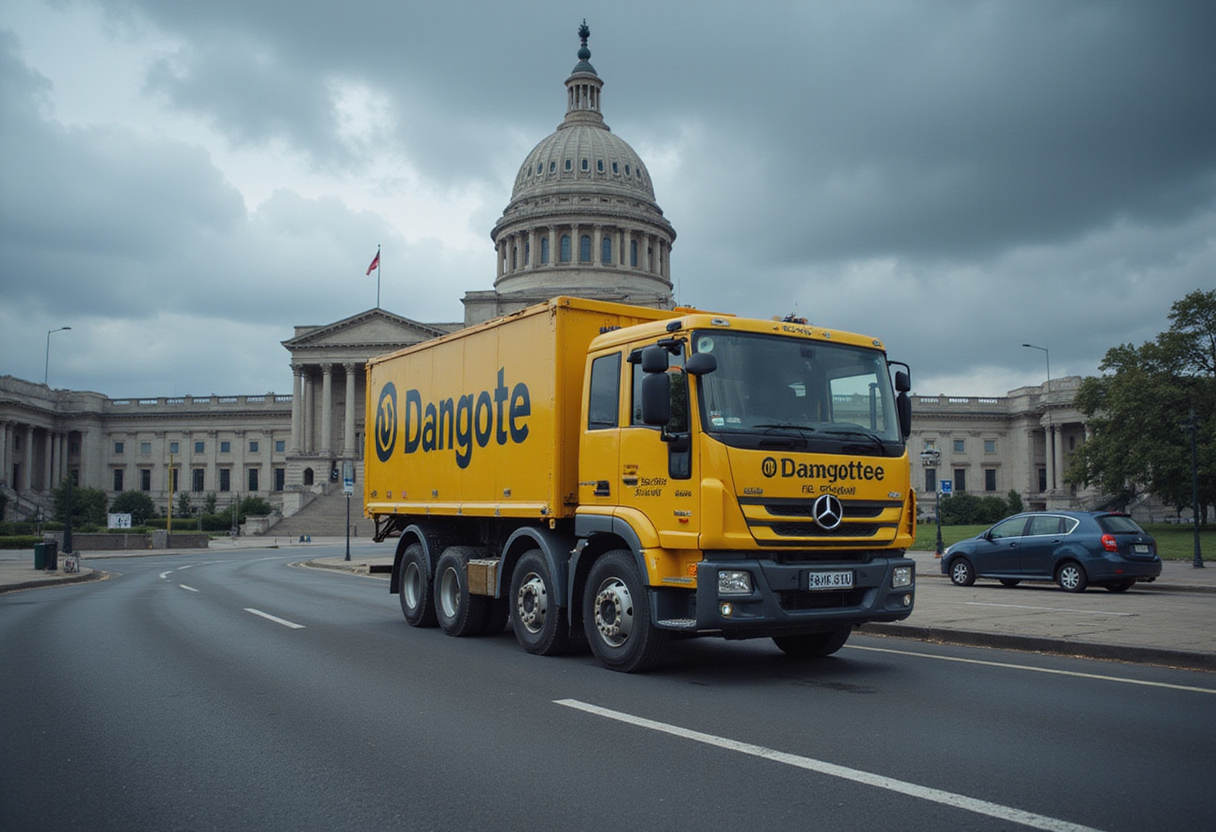
A Nigerian Senate committee has formally endorsed Dangote's move into mass vehicle production, using the visit to press for stronger policy backing for local automakers, The Sun Nigeria reports.
The endorsement places one of Nigeria's largest industrial groups — the Dangote conglomerate, better known for cement and refining — at the center of the country's recurring effort to build a domestic vehicle manufacturing base. The committee's position signals legislative appetite for a more aggressive local-content regime.
What did the Senate committee actually back?
Lawmakers backed Dangote's mass vehicle production plan and, in the same breath, pressed the case for policy support for local automakers across the board. The committee framed local assembly and manufacturing as a national industrial priority rather than a single-company matter.
The intervention matters because Nigerian vehicle programs have historically stalled without consistent policy. Automakers and assemblers operating in Nigeria have repeatedly cited tariff structures, imported used-vehicle competition and unstable incentives as barriers to scaling assembly operations.
Why does policy support dominate the debate?
Nigeria's automotive policy history is a cycle of announced intentions and partial follow-through. Assembly plants have opened under incentive regimes, only to see utilization fall when policy direction shifted or import economics favored used vehicles.
By tying its endorsement to a demand for policy support, the Senate committee is effectively saying that private investment alone — even from a group with Dangote's capital depth — cannot carry mass vehicle production without a durable government framework covering tariffs, procurement and incentives.
Dangote's entry, if it reaches mass-production scale, would rank among the most significant industrial bets in the Nigerian automotive sector to date. The conglomerate has a track record of executing large projects, most recently its refinery business, which lends credibility to its manufacturing ambitions.
What to watch next
The key questions now are legislative, not rhetorical: whether the committee's endorsement converts into a concrete bill or amendment strengthening the national automotive policy, what fiscal incentives accompany it, and when Dangote discloses production volumes, plant location and vehicle segments. Watch for a formal policy directive and any capacity or investment figures from Dangote in the coming months.
via Google News: Auto plant and vehicle production (Source)
More from Sophie Lindqvist
Show full bio
Correspondent covering business strategy at Autoplant Brief.
99 articles