ECO-8533 · REV Z · effective November 13, 2026
Vehicle Plants & ProductionRELEASEDEngineering notice
Kia Puts $2 Billion Behind a Second Indian Plant
Kia India has signed a $2 billion MoU with Andhra Pradesh for a second Anantapur plant, adding 200,000 units of annual ICE and EV capacity from early 2030.
Scope of change
- Kia India signed a $2 billion MoU with Andhra Pradesh for a second plant, including supplier investment.
- The new 465-acre Anantapur facility targets 200,000 units of annual capacity, with production from early 2030.
- The plant is expected to create roughly 12,000 direct and indirect jobs.
- Combined capacity across both Kia India plants will exceed 600,000 units per year.
- Cumulative investment across both plants will reach $5 billion.
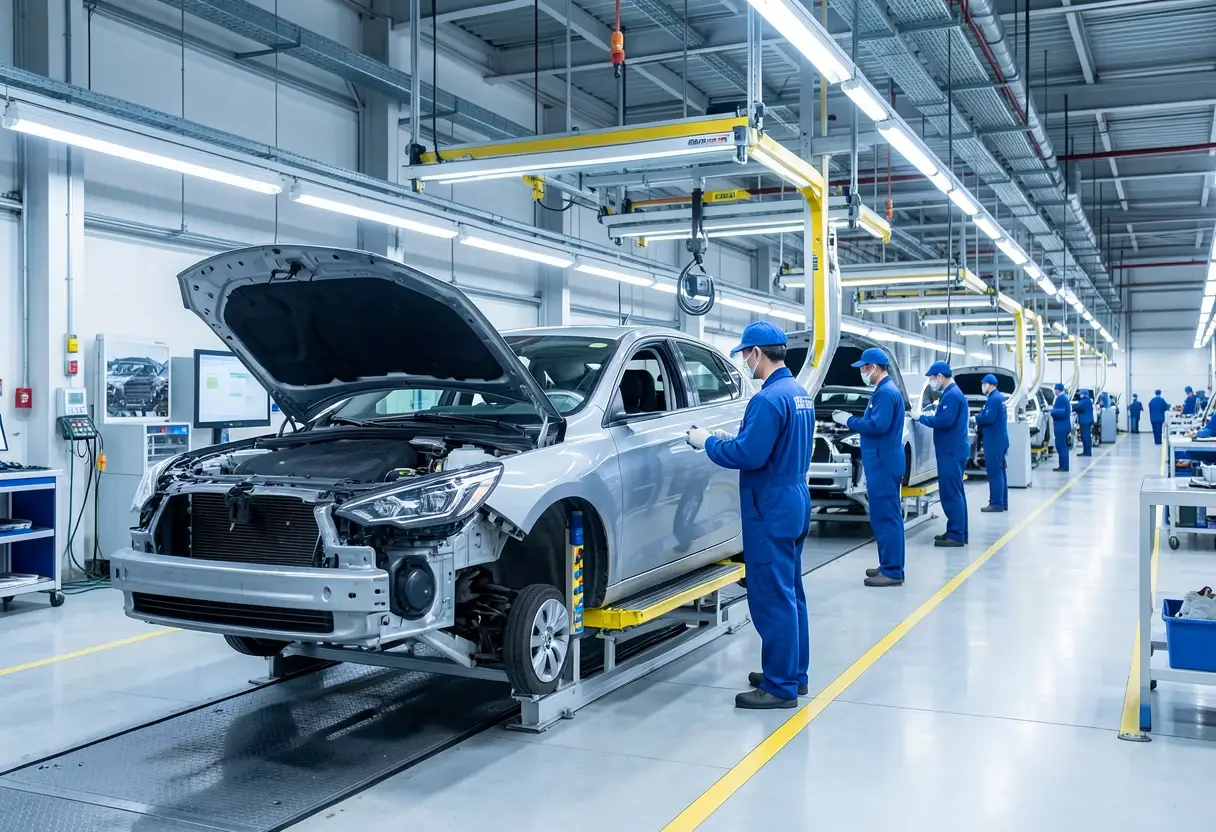
Kia India and the Government of Andhra Pradesh have signed a Memorandum of Understanding worth $2 billion — a combined figure covering Kia and its supplier partners — to build the automaker's second manufacturing plant in the state.
The facility will occupy 465 acres near Anantapur and carry an annual production capacity of 2 lakh units — 200,000 vehicles a year, in plain counting. Production is scheduled to begin in early 2030, and the site will build new models across both internal combustion and electric powertrains. Kia expects roughly 12,000 direct and indirect jobs to come out of it.
The MoU stage matters here. This is an announced intention with a state government, not a confirmed, fully-permitted capacity plan with equipment orders behind it. Trade readers will want to watch how quickly the agreement converts into land, permits and capital commitments.
What does this do to Kia's Indian footprint?
It lifts Kia India's combined annual capacity across both plants above 6 lakh units. The existing Anantapur plant contributes 4.3 lakh units; the proposed site adds 2 lakh on top. Six hundred thousand units a year puts Kia in serious volume territory for the Indian market, where annual sales of that size place an automaker among the top tier of passenger-vehicle producers.
Cumulative investment across the two sites will reach $5 billion. The first plant accounted for $2.9 billion of that; the new $2 billion program, shared with suppliers, brings the balance.
In short: Kia is doubling down on one state, not diversifying across regions. The takeaway is that Andhra Pradesh becomes the centre of gravity for the Korean brand's Indian manufacturing.
What does the existing plant build today?
The current Anantapur facility produces a broad mixed-powertrain lineup:
- Seltos
- Syros (ICE and EV)
- Sonet
- Carens (ICE and CNG)
- Carens Claris (ICE, EV and CNG)
- Carnival
- Sorento (ICE and HEV)
That mix — petrol, diesel, CNG, hybrid and battery-electric under one roof — signals what the second plant is likely to mirror: flexible lines rather than single-powertrain dedication.
What did Kia's leadership say?
Gwanggu Lee, Managing Director and CEO of Kia India, framed the plant as both a capacity and a responsiveness play. "Our second manufacturing plant marks a significant new chapter, strengthening our ability to respond to customer demand with greater speed and flexibility, while supporting the introduction of new models across ICE and EV powertrains," Lee said.
He added: "This will further expand our Made-in-India footprint, strengthening our ability to serve both domestic and overseas markets."
The export line is not decoration. Kia already ships Indian-built vehicles abroad, and 200,000 additional units gives the company room to serve demand beyond the subcontinent.
What to watch next
Three checkpoints will tell us whether this MoU hardens into steel. First, the conversion of the agreement into a formal investment approval and land handover. Second, supplier announcements — the $2 billion figure includes partners, so tier-one commitments will reveal the true scale. Third, the first confirmed model allocation for the new lines ahead of the early-2030 launch.
Until then, it's a signed intention with a five-year runway. The number to hold Kia to is 200,000 units by 2030.
via EVreporter (Source)
More from Daniel Okafor
Show full bio
Senior reporter covering regulation, policy and their impact on Automotive manufacturing and vehicle production at Autoplant Brief.
330 articles