ECO-4896 · REV A · effective October 30, 2026
Production TechnologyAPPROVEDEngineering notice
Infineon to Pour €1.1 Billion into Villach GaN Chip Plant by 2034
Infineon will invest €1.1 billion in Villach by 2034 to launch the world's first 300-mm GaN power semiconductor volume production, backed by €319 million in EU state aid.
Scope of change
- Infineon to invest €1.1 billion in Villach, Austria by 2034
- Volume production of 300-mm GaN power semiconductors launches end-2027
- EU has approved €319 million in state aid under the European Chips Act
- GaN market forecast to grow ~35% annually to about US$3.5 billion by 2031
- Infineon Austria employs ~5,800 people, ~4,800 of them at the Villach plant
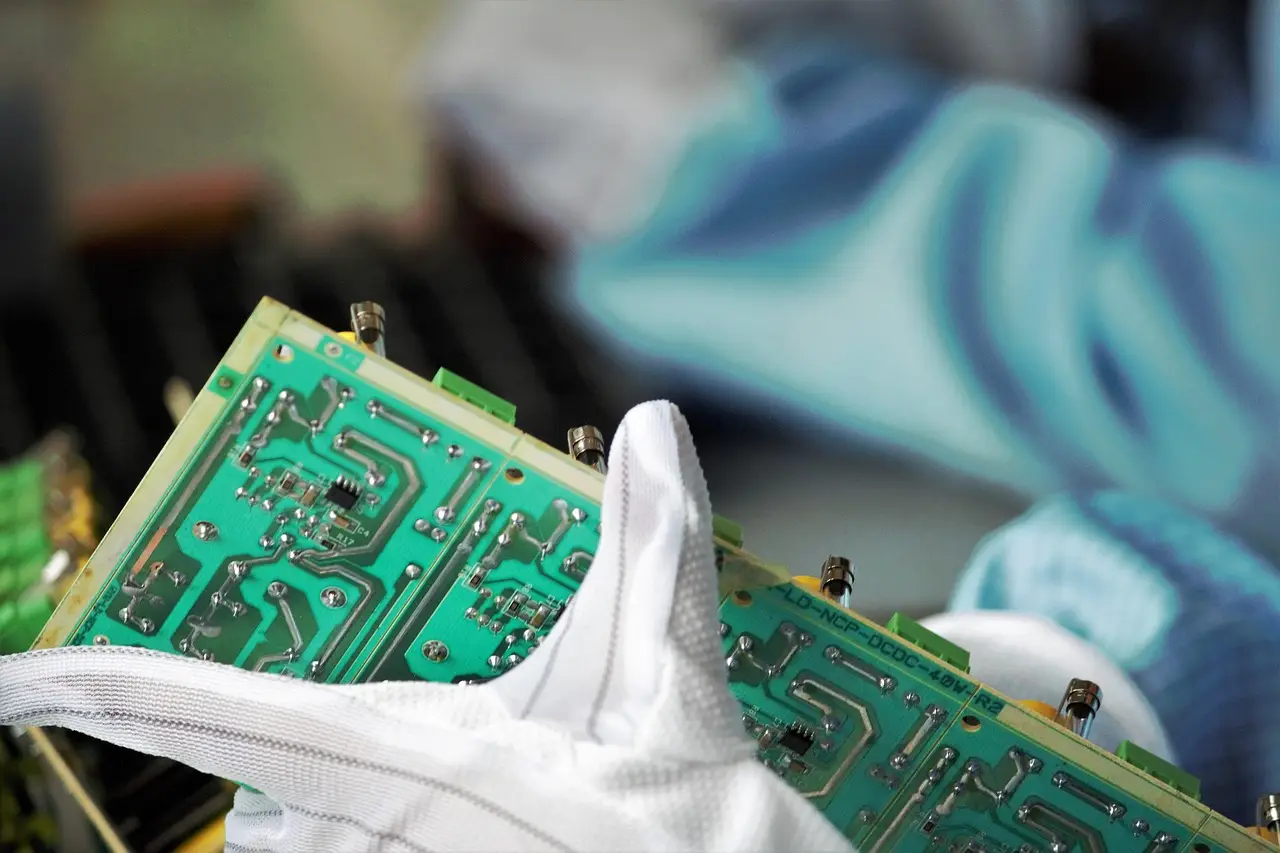
Infineon plans to invest around €1.1 billion in its Villach site in Austria by 2034, backing the world's first high-volume production of gallium nitride (GaN) power semiconductors on 300-millimetre wafers. The German chipmaker confirmed the launch of that volume production for the end of 2027. The project carries €319 million in EU-approved state aid under the European Chips Act, with formal funding approval from the Austrian Ministry of Economic Affairs expected on schedule.
The investment builds on a 2024 production breakthrough: Infineon moved GaN power semiconductors from 200-mm to 300-mm wafers, boosting production volume by a factor of 2.3 and enabling high-volume manufacturing. Utilising and modernising existing cleanroom facilities at Villach — the controlled-environment spaces essential for chip fabrication — should make the capacity expansion particularly efficient and cost-effective, the company said.
CEO Jochen Hanebeck framed the move in strategic terms. "This substantial investment shows our clear commitment to strengthening the European semiconductor ecosystem and Europe's technological sovereignty," he said. "By establishing high-volume manufacturing on 300-millimetre wafers, we will be the first company in the world to bring gallium nitride power electronics into volume production."
Why GaN on 300 mm matters
Gallium nitride switches and converts electricity far more efficiently than conventional silicon. That allows smaller, higher-performance systems with minimal energy losses and reduced heat generation. Target demand pools include AI data centres, electric vehicles, renewable energy, robotics and consumer electronics.
The market forecast underpinning the bet: analysts expect roughly 35% annual growth for GaN power semiconductors between 2025 and 2031, reaching approximately US$3.5 billion.
What does this change for Villach and Austria?
Infineon Austria currently employs around 5,800 people, of whom approximately 4,800 work at the Villach plant. The expansion secures and grows highly skilled jobs at a site already central to the group's power-semiconductor operations. Austrian Chancellor Christian Stocker placed the deal among the country's largest high-tech investments.
"With Infineon's billion-euro investment, we are witnessing one of the largest single investments in the history of Austria's high-tech industry," Stocker said. "This is not only a strong commitment to Austria as a business location but also helps ensure that the future of the semiconductor industry will not be shaped solely in Asia or the United States, but also in Austria and Europe."
Economic Minister Wolfgang Hattmannsdorber pointed to multiplier effects, citing statistics that every chip-industry job can provide six additional jobs across the broader economy. He noted Austria ranks first in the EU relative to population on business R&D spending in semiconductors.
Sabine Herlitschka, CEO of Infineon Technologies Austria, stressed the research-to-industry link. "Competitiveness and technological sovereignty emerge where excellent research is translated into industrial value creation," she said, adding that the project benefits the entire Austrian semiconductor ecosystem, from universities to industrial partners.
What to watch next: the formal Austrian funding approval, the end-2027 start of 300-mm GaN volume production in Villach, and whether the projected 35% market growth materialises in AI data centre and EV order books.
via electrive.net (Original)
More from Marcus Bennett
Show full bio
News editor covering regulation, policy and their impact on Automotive manufacturing and vehicle production at Autoplant Brief.
293 articles
Also circulated
- Wolfspeed secures $1.5B DOD loan for SiC, GaN capacity build
- NOVOSENSE, UAES and Innoscience join on EV power electronics
- Bosch splits semiconductors into standalone division from 2028
- SAIC Motor Commits $232 Million to New Auto Plant in Spain
- Nio’s cylindrical battery plan points to a very small year-end batch