ECO-3853 · REV F · effective November 5, 2026
Automation & RoboticsRELEASEDEngineering notice
Hyundai to Run Level 4 Autonomous Truck Trials in 2027
Hyundai will run Level 4 autonomous trials with two Xcient trucks on 100 km and 400 km Korean routes from early 2027, using startups Mars Auto and RideFlux.
Scope of change
- Trials begin early 2027 in South Korea and run for most of the year
- Two Xcient heavy-duty trucks: one hydrogen fuel cell, one diesel
- Routes: 100 km highway/urban mix and a 400 km mainly highway route
- Startups Mars Auto and RideFlux each equip one truck with their own systems
- Hyundai Mobis and Hyundai Glovis join Hyundai and Kia in the agreement
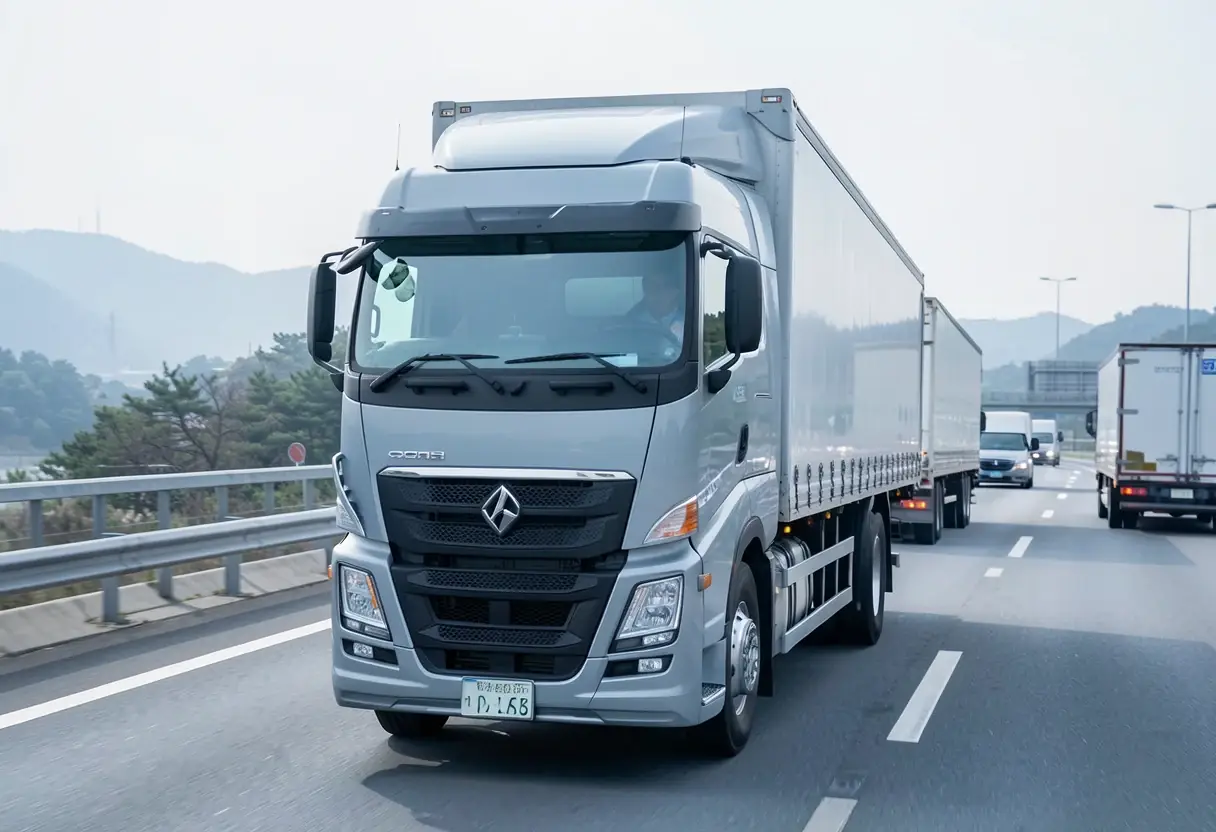
Two trucks and 500 kilometers of road. That is the full physical footprint of Hyundai Motor Group's Level 4 autonomous driving program for heavy-duty trucks, set to begin in early 2027 in South Korea.
The group confirmed it will run trials with two Xcient heavy-duty trucks — one hydrogen fuel cell, one diesel — on two separate logistics routes. The first route covers 100 km and mixes highways with urban roads. The second stretches 400 km and consists mainly of highways. The trials are scheduled to last throughout most of 2027.
The fleet is small. That matters. HMG has not announced production volumes, a commercial launch date, or a wider rollout beyond the two test vehicles, and the company has drawn no line between these trials and any revenue program. What it has announced is a test, not a product.
Who is building what?
Hyundai Motor and Kia Corporation signed the trial agreement together. They bring in three group affiliates: Hyundai Mobis Company, the components manufacturer, and Hyundai Glovis Company, the group's main logistics operator, plus the truck-owning automakers themselves.
The outside parties are two local autonomous-driving software developers, Mars Auto Inc and RideFlux Inc. Each startup will equip one of the two trucks with its own hardware and software systems, including customised control units and autonomous-driving system interfaces. In practice, each truck becomes a rolling testbed for a different supplier stack. HMG gets a side-by-side comparison; the startups get real-world data on commercial platforms.
No financial terms of the agreement were disclosed. HMG did not say what happens to the losing stack if one system outperforms the other.
What does Level 4 actually mean here?
Level 4 autonomy allows a vehicle to drive itself without human intervention, but only under certain driving conditions — and human supervision remains required. That caveat defines the whole program. These are supervised trials on fixed routes, not driverless freight.
HMG confirmed three stated aims for the trials:
- Improve autonomous-driving software and validate its integration with vehicle control systems under actual operating conditions
- Develop backup systems that can take control of the vehicles if the primary systems fail
- Collect data needed to support eventual commercialisation
The second bullet is the quiet headline. Redundant fallback systems — steering, braking, and control units that can take over on failure — are the hardest engineering problem in Level 4 trucking and the main cost driver. HMG says it wants to develop them. It did not say how far along it is.
Commercialisation, the third aim, carries no timeline in the announcement. Data collection is a prerequisite for a product decision, not evidence that a product decision has been made.
Why trucks before robots?
HMG said it is stepping up efforts to develop and commercialise autonomous technology in both commercial vehicles and light passenger vehicles. Fixed-route freight is the easier first target: predictable paths, highway cruising, and a fleet operator — Hyundai Glovis — already inside the group to absorb the results. Passenger robotaxis face denser urban variables and tougher liability questions.
The group's structure also means the trials stay in-house end to end. Mobis supplies components. Glovis supplies logistics demand. Hyundai and Kia supply vehicles. Only the software layer is external, and it is split between two competing vendors.
What to watch next
The trials start in early 2027. Watch for three markers. First, whether either startup's stack completes the 400 km highway route without fallback intervention. Second, whether HMG extends the program beyond two trucks or beyond the trial period — a sign of genuine commercialisation intent rather than data collection. Third, any regulatory step by Korean authorities enabling driverless operation on designated freight corridors, without which Level 4 trucking stays a supervised experiment.
via just-auto (Source)
More from Amara Osei
Show full bio
Market editor covering technology and product news in Automotive manufacturing and vehicle production at Autoplant Brief.
287 articles
Also circulated
- Hyundai's $12B Georgia Metaplant Named 2026 Assembly Plant of the Year
- Hyundai Pairs People With Robots At Georgia Metaplant
- Hyundai Mobis Begins Mass Production of EV Powertrains in Slovakia
- Hyundai Targets 25,000 Atlas Humanoids as Boston Dynamics Opens Metaplant Center
- South Korea slashes Hyundai EV plant rebuild permit window to one year