ECO-6421 · REV X · effective September 29, 2026
Auto Industry PolicyRELEASEDEngineering notice
GM projects it will out-produce Ford in U.S. plants despite tariff hit
GM expects to out-build Ford in U.S. plants this year while absorbing up to $4 billion in tariff costs — a claim to test against monthly production data.
Scope of change
- GM expects to produce more vehicles in U.S. plants than Ford, CNBC reports
- GM faces up to $4 billion in tariff-related costs
- Ranking claim is an expectation, not a confirmed build plan; final output data will settle it
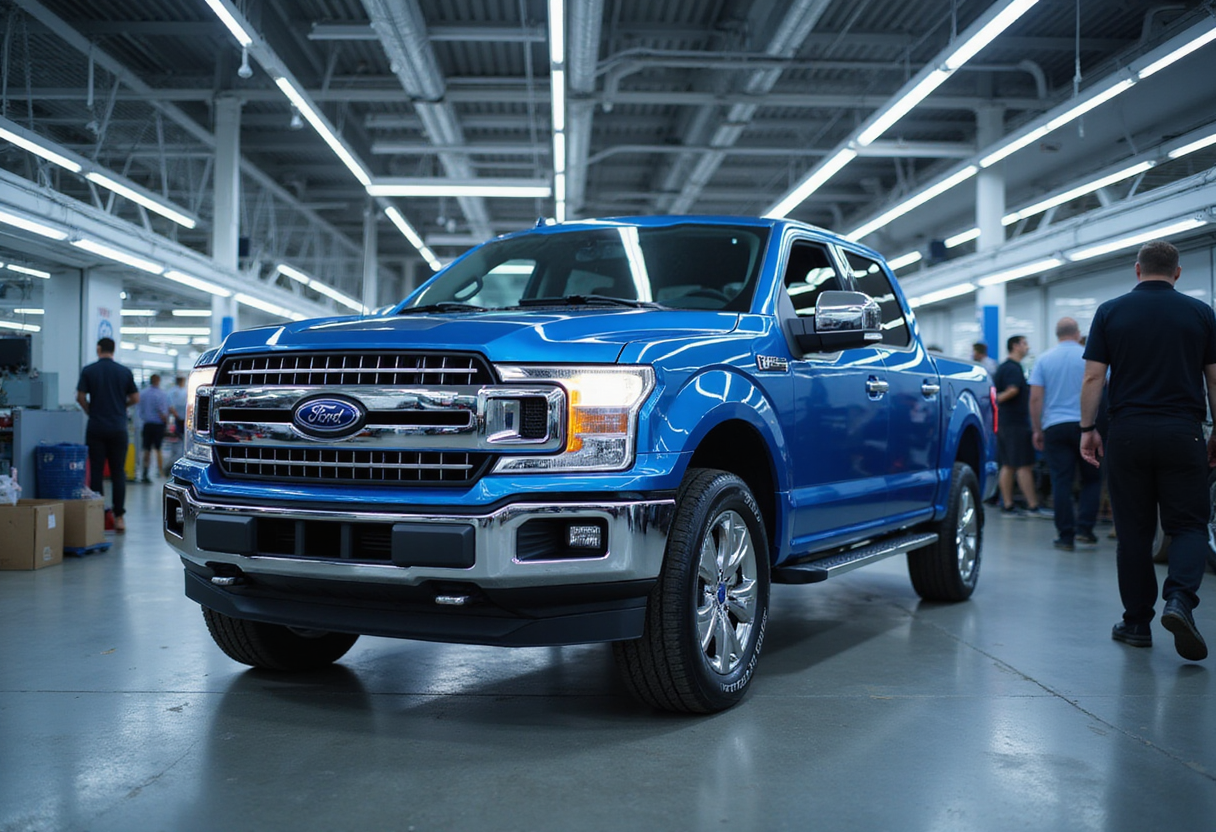
General Motors expects to build more vehicles in its U.S. plants than Ford does, even as the company braces for tariff costs that could reach $4 billion, CNBC reports.
The figure is the hardest number in the story and the one GM's production planners will be managing against for the rest of the program year. A $4 billion cost exposure on U.S.-bound production is material for any OEM of GM's scale. It ranks among the largest quantified tariff impacts disclosed so far by a Detroit automaker, and it lands on a company that has spent the past decade concentrating truck and SUV output in its domestic footprint.
CNBC's report frames the production claim as an expectation, not a confirmed build plan. GM's guidance that it will top Ford in U.S. vehicle output should be read as an announced intention rather than a verified production tally. Ford has not conceded the ranking, and full-year output numbers from both automakers will settle the question only when S&P Global Mobility and the companies themselves publish final assembly counts.
The two claims travel together for a reason. Tariff costs scale with imported parts and imported finished vehicles. If GM expects to absorb up to $4 billion while still projecting it will lead Ford in domestic production, the company is signaling two things at once: it believes its U.S. plant utilization is strong enough to carry the ranking, and it accepts that its supply base — much of it Tier 1 and Tier 2 content crossing borders, particularly from Mexico and Canada — cannot be re-sourced quickly enough to dodge the duties.
That second point matters most for suppliers. OEM tariff exposure of this size does not stay at the OEM. Purchasing organizations will push cost-sharing conversations down the stack, and suppliers with cross-border value chains into Michigan, Indiana, Ohio, Texas and Missouri assembly plants should expect pressure on contracts that were never priced for duties. Whether GM's Tier 1s absorb, pass through, or renegotiate that cost is now a live question for the 2025 program year.
For plant-level watchers, the production-ranking claim maps onto known GM capacity. The company's U.S. truck plants — Fort Wayne, Indiana; Flint, Michigan; Silao-adjacent content feeding U.S. lines; and the Arlington, Texas SUV operation — carry the volume that would support a claim of out-producing Ford domestically. Ford's U.S. footprint, anchored by the Louisville, Kentucky and Kansas City plants and the Dearborn and Louisville truck operations, remains substantial. The gap, if it materializes, will show up in shift schedules, overtime patterns and line-rate adjustments at these facilities before it shows up in any press release.
It is also worth distinguishing what is confirmed from what is projected. The $4 billion figure is GM's own cost estimate — a forward-looking exposure range, with the word "up to" doing real work. Actual absorbed cost will depend on trade policy decisions still in motion, including whether duties on parts, Mexican-built vehicles, or Korean-built product stay at current levels. A single policy change in either direction could move the final number by billions.
What to watch next: GM's next quarterly filing, where the company will update the tariff cost estimate against actuals; monthly North American production data, which will show whether the U.S. output lead over Ford is building quarter by quarter; and any Washington decision on parts tariffs, which is the single biggest swing factor in whether that $4 billion ceiling holds.
via Google News: Auto plant and vehicle production (Source)
More from Amara Osei
Also circulated
- Trump's 50% Auto Tariff Threat Aims at Imports, May Hit U.S. Automakers
- Even a 15% U.S. Tariff Could Hit Canadian-Built Vehicles Hard
- Trump Defends Tariff Policy, Claims Revival of Auto Manufacturing
- Trump Defends Tariff Policy During Michigan Visit to GM
- Supreme Court Tariff Ruling Puts Auto Trade Costs Back in Play