Effective November 20, 2026
EV Manufacturing TransitionEngineering notice
Ford Otosan taps Circulor to build battery passports before 2027 EU deadline
Ford Otosan partners with Circulor to build digital battery passports for its electric trucks, as EU rules require QR-coded records for all traction batteries from 18 February 2027.
Scope of change
- EU Regulation 2023/1542 requires digital battery passports for traction batteries from 18 February 2027
- Ford Otosan, a Ford Motor–Koç Holding joint venture, will use Circulor's platform for its electric trucks
- F-Line E electric truck launches in Germany in 2026: 19t/294 kWh/250 km and 26t/392 kWh/300 km, both NMC
- Circulor built the Volvo EX90 battery passport in 2024 and claims traceability for over 1.4 million vehicles
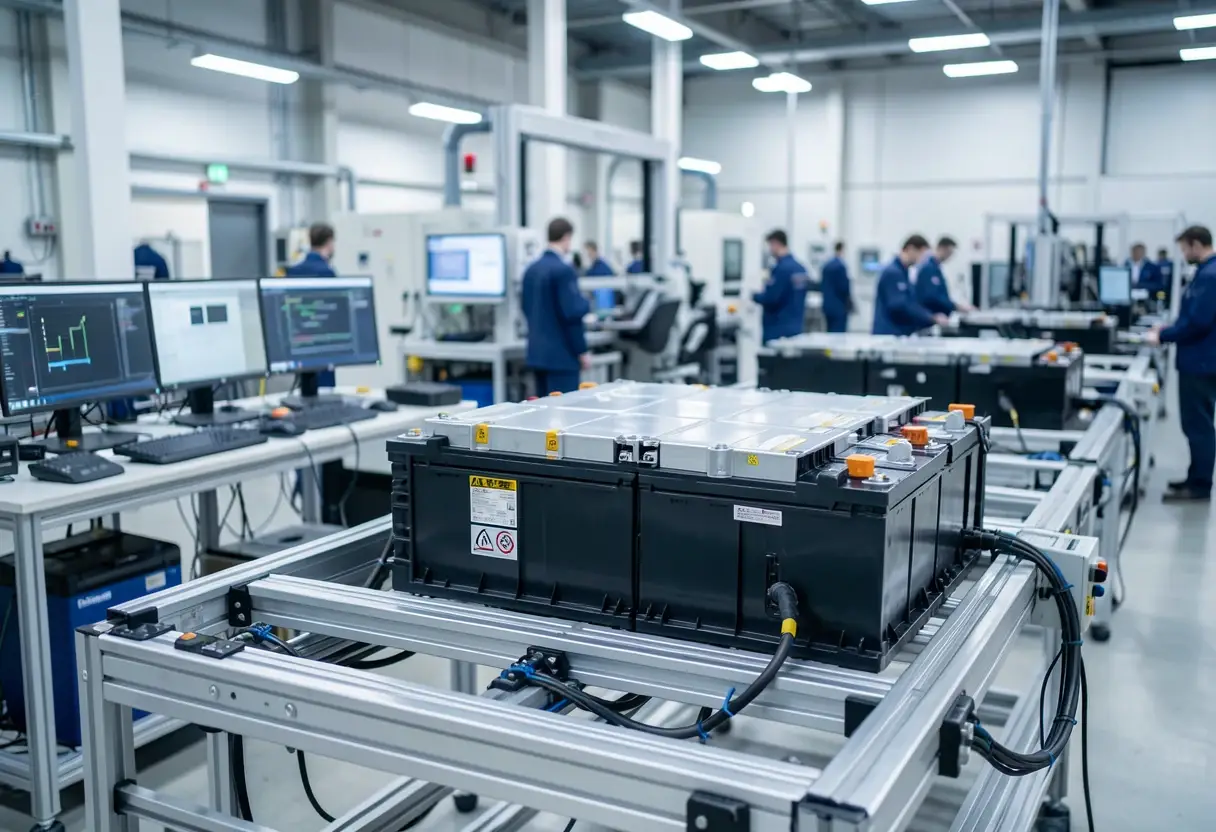
Every traction battery sold in the EU will need a digital passport from 18 February 2027. Ford Otosan, the Turkish joint venture between Ford Motor and Koç Holding, has now picked Circulor to build the data foundation for its electric trucks before that deadline hits.
The partnership covers the Ford Trucks commercial vehicle range. Circulor, a British supply chain transparency specialist, will map the battery supply chain from the ground up. The work starts with systematic recording of supplier information: which companies and production sites are involved, where materials originate, and how they are processed. High-risk materials and supply chains may require additional evidence and independent audits.
Ford Otosan will use the platform to request, collect and manage documentation. Verification depth will scale with risk, the companies say, based on the specific material, production site and supplier relationship. That claim is worth watching. Risk-based verification sounds efficient, but the regulation applies to all traction batteries regardless of how clean a supply chain looks.
What does the EU regulation require?
The EU Battery Regulation (EU) 2023/1542 mandates digital battery passports for traction batteries in electric vehicles and certain other battery categories from 18 February 2027. Each passport links to its battery via a QR code. It must carry information on technical characteristics, performance, durability, sustainability and recycling. Access rights will vary depending on the type of information and who is asking.
For commercial vehicle makers, that means consolidating supply chain data across many stages and managing it across the battery's full lifecycle. That is a heavier lift than a one-off compliance filing.
Which trucks come first?
The compliance clock matters because Ford Otosan already has an electric truck on the road to market. The F-Line E, its first series-ready electric truck, debuted at Solutrans in Lyon in November 2025 and reaches the German market in 2026. Two variants are planned:
- a 19-tonne model with 294 kWh battery capacity and up to 250 km range
- a 26-tonne model with 392 kWh gross capacity and up to 300 km range
Both use NMC batteries, whose cobalt and nickel supply chains are exactly the kind the passport rules target.
Is Circulor a proven partner?
Circulor has done this before, with caveats attached to the claims. Together with Volvo, it developed a battery passport for the electric EX90, introduced in 2024. That system traces battery materials along the supply chain and shares selected information via QR code. According to the company itself, the platform now supports material traceability for more than 1.4 million vehicles. That figure is Circulor's own and not independently verified here.
Ford Otosan says it wants a comparable data foundation for its electric commercial vehicles, aligned with the EU's future documentation requirements.
What to watch next: whether the F-Line E launch in Germany in 2026 arrives with a functioning passport system already in place, and whether Ford Otosan discloses how many suppliers and sites the initial mapping covers before the February 2027 deadline forces the issue.
via electrive (Source)
More from Amara Osei
Show full bio
Market editor covering technology and product news in Automotive manufacturing and vehicle production at Autoplant Brief.
336 articles
Also circulated
- T&E: EU-Made Battery Cell Supply Will Be Sufficient by 2030
- Rebattex, LKQ Atracco set used EV battery resale framework
- EU and UK Move Toward Second Delay of EV Rules of Origin
- UK drafts own tariff regime on Chinese EVs to track EU 'Made in Europe' rules
- ACEA Study Questions EU Battery Supply Chain Readiness