ECO-6755 · REV H · effective November 13, 2026
Automation & RoboticsRELEASEDEngineering notice
China Falls to 19th in Robot Density as Census Data Reshapes IFR Rankings
Korea leads IFR robot density at 1,066 units per 10,000 workers; China drops to 19th on census data, not fewer robots. Mexico lags at 64 units.
Scope of change
- South Korea tops IFR World Robotics 2026 with 1,066 robots per 10,000 manufacturing workers; Singapore has 873, Germany 469.
- China fell to 19th place at 193 units due to revised National Economic Census workforce data, after ranking third at 470 units in the 2024 report.
- China's robot density rose 147% between 2020 and 2025 and it remains the world's largest industrial robot market.
- EU density hit a record 240 units, up about 35% in five years; the US sits eighth at 323 units.
- Mexico, a major vehicle production hub for the US, records just 64 units — under half the new global average of 152.
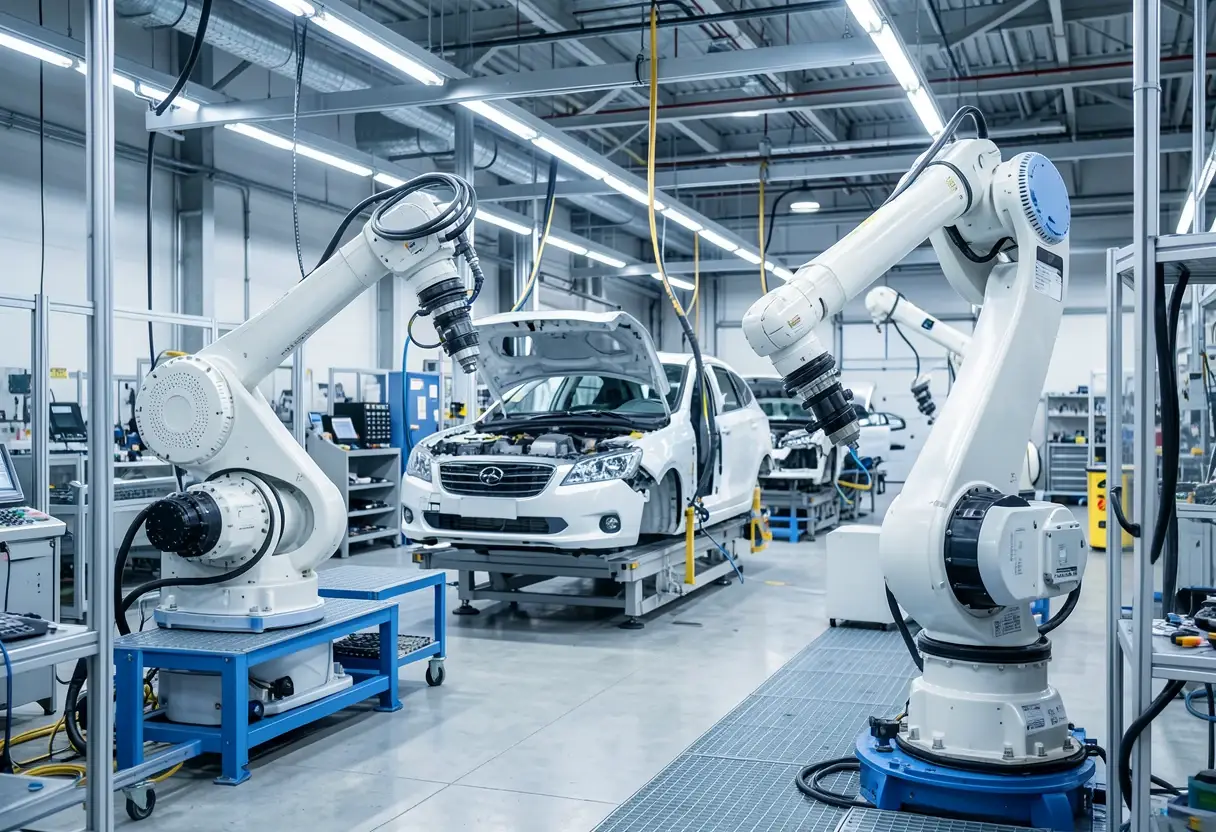
South Korea operates 1,066 industrial robots per 10,000 manufacturing workers, the highest density in the world, according to the International Federation of Robotics' World Robotics 2026 report. Singapore ranks second at 873 units. Germany takes third at 469, against a new global average of 152.
The headline shift sits further down the table. China falls to 19th place with 193 units per 10,000 workers, a year after the IFR's 2024 report placed it third at 470 units, ahead of both Germany and Japan.
Why did China's ranking collapse?
The drop is statistical, not industrial. China's figure now rests on employment data from its National Economic Census, which recorded a far larger manufacturing workforce than earlier estimates implied, and the same robot stock divided by more workers yields a lower density ratio. The IFR itself frames the change this way: revised workforce data, not fewer robots.
The underlying trend still points up. China's robot density rose 147% between 2020 and 2025, and the country remains the world's largest market for industrial robots. The census-based baseline makes this year's Chinese figure and the recalibrated global average difficult to compare against earlier editions of the report. The ranking, in short, understates the scale of Chinese automation.
IFR President Jane Heffner defended the metric's logic. "Tracking robot density creates a level playing field for global analysis by adjusting the number of operational industrial robots against every 10,000 employees in the manufacturing sector," she said. A level playing field, yes — but one whose goalposts moved with the census.
Where do the other manufacturing powers stand?
The EU posted a record 240 units, up roughly 35% over five years. Five of the world's top ten economies are EU members: Germany, Sweden, Denmark, Slovenia and the Netherlands.
- North America: 214 units average
- United States: 323 units, eighth worldwide
- Canada: 242 units
- Japan: 452 units, fourth worldwide
- Asia overall: 144 units
- Mexico: 64 units
What does this mean for auto manufacturing?
Mexico is the outlier that matters for vehicle production. The country serves as a major build hub for the US market, yet its robot density of 64 units runs well under half the global average of 152. That gap invites a question the report does not answer: whether Mexican plants are genuinely less automated, or whether the same denominator problem — a large informal or undercounted manufacturing workforce — that hit China also distorts Mexico's ratio. The IFR offers no census-level revision for Mexico, so the comparison stands as published.
The US figure of 323 units, eighth globally, reflects a mature installed base concentrated heavily in automotive assembly. Japan's 452 units keep it fourth, consistent with its long-standing robot-intensive supply chain.
What to watch next
Watch whether the IFR applies similar census-based workforce revisions to other large emerging manufacturing bases in future editions, because a single denominator change moved China 16 places down the table. Watch Mexico's density figure as nearshoring investment adds assembly capacity through 2026 and 2027. And watch China's own trajectory — a 147% five-year density gain suggests the 19th-place ranking is a measurement artifact that sustained install growth will eventually erase.
via businesswire.com (Original)
More from Amara Osei
Show full bio
Market editor covering technology and product news in Automotive manufacturing and vehicle production at Autoplant Brief.
312 articles
Also circulated
- U.S. Passes Japan as World's No. 2 Industrial Robot Market
- Global factory robot fleet passes 5 million units, IFR data show
- Japanese Auto Industry Automation Use Hits Five-Year High
- Global Factory Robot Population Passes 5 Million Units, IFR Says
- US Tooling Can't Launch Cars Without China, CAR Study Finds