ECO-6203 · REV X · effective September 30, 2026
EV Manufacturing TransitionRELEASEDEngineering notice
Aluminium Motor Windings: The Costly Defect Trap In EV Supply Bids
Suppliers are losing millions on defects hidden inside aluminium EV motor windings as the copper replacement shift moves manufacturing risk downstream.
Scope of change
- Suppliers are incurring million-scale losses from latent defects in aluminium motor windings as EV makers replace copper
- Aluminium's different conductivity, oxide behaviour and mechanics shift defect risk to winding and joining stages that standard electrical checks miss
- Defect cost multiplies downstream: a stator reject found inside a finished e-axle absorbs far more than scrap aluminium value
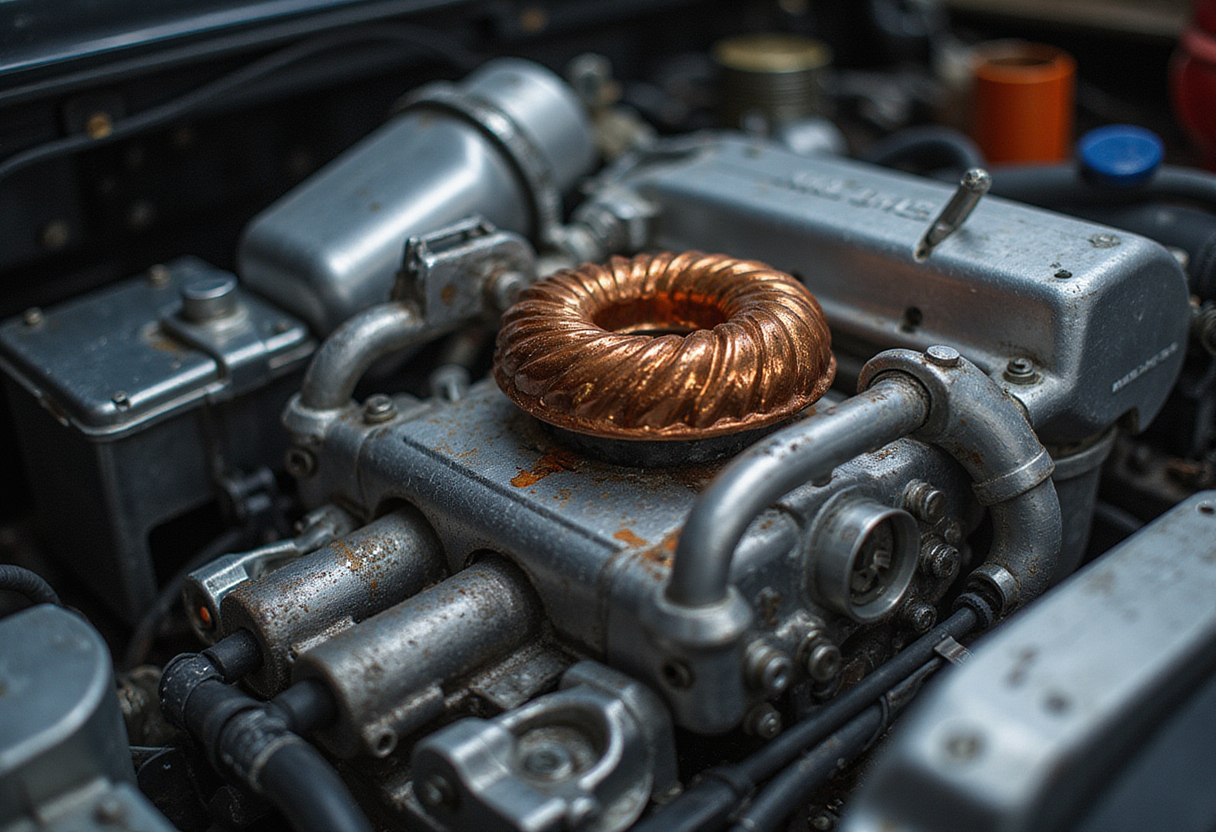
The headline number in this story is the one that hurts: suppliers are losing millions — not on the price of copper, but on defects buried inside aluminium motor windings. As EV makers push copper out of traction motors to cut bill-of-material cost, the manufacturing risk has not disappeared. It has moved down the supply chain, straight into the plants of winding specialists and tier-one e-motor producers.
Aluminium is the substitution candidate of the moment. It is cheaper and lighter than copper, and for high-volume EV programs the raw-material arithmetic favours it at scale. But the claim that aluminium conductors are a drop-in replacement does not survive contact with the production line. The material behaves differently at every stage that matters — wire drawing, forming, welding, varnishing and final test.
The defect trap sits in exactly that gap between design intent and process capability. Aluminium's lower conductivity forces larger conductor cross-sections, which changes slot fill geometry. Its oxide layer is harder to control than copper's during joining, which shifts weld-quality statistics. Its softer mechanical behaviour changes how windings hold shape through impregnation and cure. Each of these is a process variable, and each is a place where a latent defect can pass a standard end-of-line electrical check and surface later as a field failure or a customer rejection.
That is the mechanism behind the seven-figure losses now hitting suppliers. A defect that escapes detection at the winding stage is not caught until downstream — after the hairpin is welded, the stator is assembled, or the motor is built and tested at the OEM. The cost of a reject multiplies at every step. By the time a faulty stator is identified inside a finished e-axle, the supplier is absorbing not just the scrap value of the aluminium, but the copper rotor assembly, the inverter, the housing, the machining time and the logistics of containment.
For purchasing departments at OEMs, the lesson is straightforward. Any supplier quotation built on aluminium windings should be read as a claim to verify, not a fact. The verification questions are specific. What is the supplier's measured defect escape rate on aluminium conductors, versus copper, at current volume? What non-destructive testing replaces the electrical checks that copper's process window made reliable? What is the weld-process capability index on aluminium-to-aluminium and aluminium-to-copper joints? Suppliers who cannot answer with data are carrying the risk silently, and pricing it — or not pricing it — into the program.
The transition also redraws the tier structure. Winding and hairpin specialists who invested in copper-specific tooling and quality systems face requalification costs they may not have fully loaded into their quotes. Tier-one motor manufacturers who sub-contract stator production inherit the escape risk without direct control of the process that creates it. OEMs, in turn, hold warranty exposure on motors whose failure modes are less statistically characterised than the copper designs they replace.
What to watch next: the pace at which announced aluminium-winding programs convert into confirmed production volumes; the inspection-equipment investments suppliers announce — or conspicuously defer — alongside those awards; and the first published field-failure data comparing aluminium-wound and copper-wound motors in high-volume EV fleets. That dataset, more than any press release, will determine whether aluminium substitution is a genuine cost win or a defect liability wearing a cheaper price tag.
via Google News: Automotive suppliers and Tier-1s (Source)
More from Amara Osei
Also circulated
- Charged EVs Spotlights Ultrasonic Joining For EV Assembly Efficiency
- EV Manufacturing Confidence Rises as Costs Decline
- CommercialSearch Report: EV Production Growth Loses Steam
- Rare Earth Supply Fragility Puts Auto Industry's Magnet Supply in Focus
- Rare-earth-free motor program AEM adds another development partner