ECO-9899 · REV N · effective September 30, 2026
EV Manufacturing TransitionRELEASEDEngineering notice
Charged EVs Spotlights Ultrasonic Joining For EV Assembly Efficiency
Charged EVs examines ultrasonic welding for critical connections in EV manufacturing. Plant-level specifics are absent, so readers should verify vendor claims against production data.
Scope of change
- Charged EVs published 'Driving Efficiency In EV Manufacturing: Ultrasonic Solutions For Critical Connections'
- The article addresses ultrasonic joining for critical connections in EV production but names no OEM plant, supplier, volumes, or capacity figures
- Readers should verify vendor claims on ultrasonic welding against production data such as line rates, cycle times, and first-pass yields
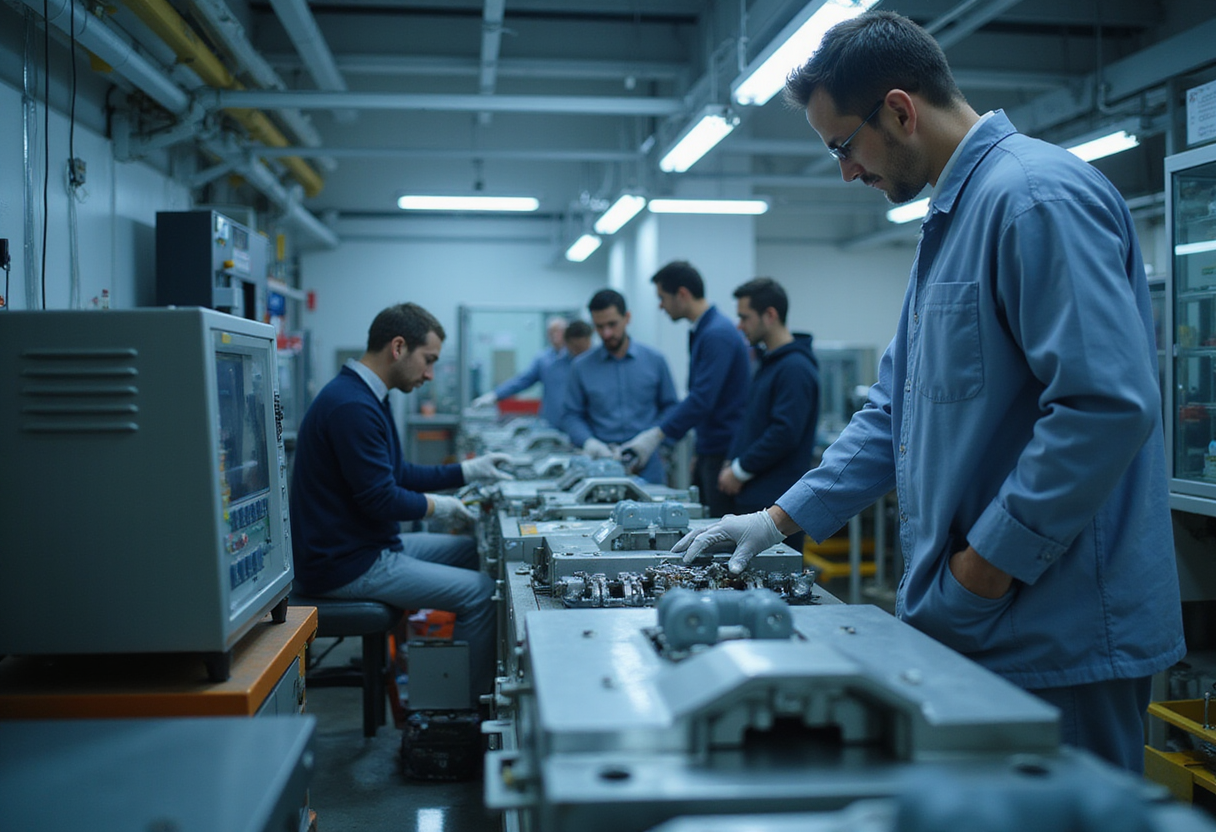
Charged EVs has published a feature on ultrasonic welding technology as a route to greater efficiency in electric vehicle manufacturing, focusing on what the publication calls the industry's need for reliable "critical connections" in high-volume EV assembly.
The article, titled "Driving Efficiency In EV Manufacturing: Ultrasonic Solutions For Critical Connections," addresses a joining problem that sits squarely in the production engineering layer of EV programs: as automakers shift battery-electric platforms into volume production, the number of electrical and electronic connections per vehicle has multiplied, and each one represents a potential quality escape on the line.
The syndicated headline available to Autoplant Brief does not include plant-level specifics — no named OEM facility, supplier tier, unit volumes, or capacity figures appear in the summary now circulating through news aggregators. Readers should treat the piece accordingly: it is a technology-oriented supplier-perspective article, not a confirmed production program announcement. Claims about cycle-time gains, energy savings, or joint reliability made in vendor-sponsored coverage of this kind warrant verification against actual line-rate data before being treated as benchmark figures.
Ultrasonic joining has become a recurring theme in EV manufacturing trade coverage because the technology addresses several points where electric vehicle assembly differs from internal-combustion builds. High-voltage harnesses, busbar connections, battery module interconnects, and sensor wiring all demand repeatable metal-to-metal or wire-to-terminal joints at line speed. Thermal processes such as resistance welding compete in the same space, as do laser welding and crimping, and each carries trade-offs in energy draw, tooling wear, and process monitoring capability that determine where it wins on the factory floor.
The piece's framing — efficiency in manufacturing rather than vehicle performance — signals where the editorial weight sits: process cost per joint, throughput, and defect rates. Those are the metrics plant engineers will need to see quantified before any adoption decision. Trade-press articles of this type typically draw on equipment-maker input, and Charged EVs regularly runs supplier-authored technical features, so procurement and manufacturing-engineering readers should separate the physics from the pitch when evaluating the arguments.
For manufacturers mapping joining technology to program timing, the practical questions are the familiar ones. What joint geometries does the process cover, and at what cycle time relative to takt? What does the equipment cost per station against resistance or laser alternatives? What in-process monitoring does the system provide for traceability, and how does that data feed quality systems as volumes climb? Without plant-level case data, the article functions as a primer rather than proof.
What to watch next: whether the technology described in the piece appears in named EV program launches with disclosed line rates and joint counts, and whether OEMs or tier-one suppliers publish validated process data — cycle times, first-pass yields, energy per joint — that would move ultrasonic solutions from technical argument to production fact.
via Google News: EV manufacturing (Source)
More from Grace Kim
Show full bio
Staff writer covering industry trends and analytics at Autoplant Brief.
82 articles
Also circulated
- CommercialSearch Report: EV Production Growth Loses Steam
- Real-Time Measurement Moves Laser Weld Verification Into EV Production
- EV Manufacturing Confidence Rises as Costs Decline
- EU Industry Accelerator Act Looms Over Europe's EV Plants
- Forbes Analysis: Tariffs, Margins, EV Slowdown Fuel Auto Consolidation