ECO-1821 · REV X · effective October 9, 2026
Industry Analysis & MarketsRELEASEDEngineering notice
51-co-sponsor Chinese vehicle ban stalls over Paul hold
The Connected Vehicle Security Act, carrying 51 Senate co-sponsors and unanimous committee backing, stalled on 24 September over Rand Paul's hold. A 15% ownership threshold now also threatens Mercedes-Benz's US market position.
Scope of change
- 51 Senate co-sponsors and unanimous committee backing for the Connected Vehicle Security Act, delayed on 24 September
- Bill has 100+ House co-sponsors; sponsors target Senate passage before end of October and House action in November
- Restrictions phase in from 2027 (complete vehicles and software) and 2030 (hardware components)
- 15% Chinese-ownership threshold could capture Mercedes-Benz, where Chinese investors hold roughly 20%
- Seven automakers — GM, Ford, Toyota, Volkswagen, Hyundai, Stellantis, Tesla — jointly urged Trump in September to maintain restrictions
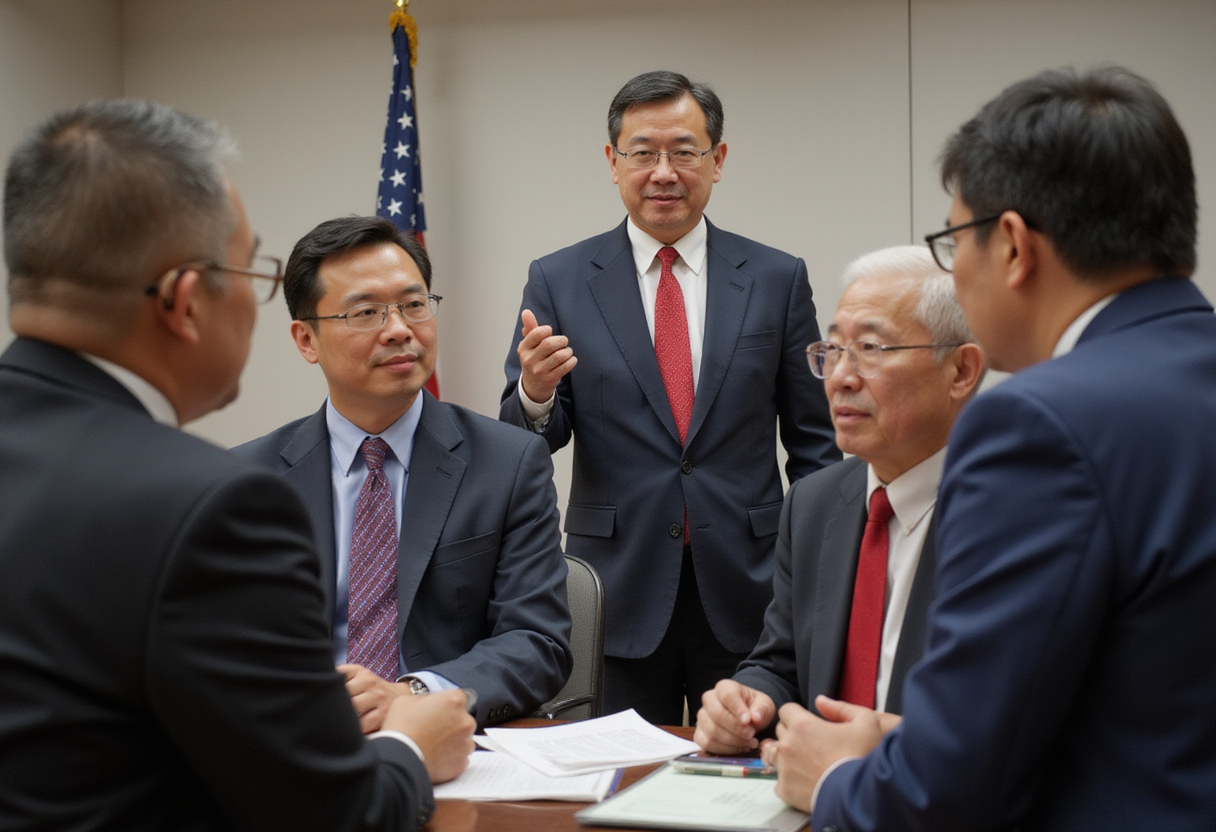
51 sponsors, one hold, one threshold problem
The Connected Vehicle Security Act, backed by 51 Senate co-sponsors and carrying unanimous committee approval, stalled on 24 September when Senators Bernie Moreno and Elissa Slotkin agreed to delay a planned fast-track vote rather than fight through a hold placed by Senator Rand Paul.
The postponement pushed the vote past President Donald Trump's summit with Chinese President Xi Jinping. Sponsors now target Senate passage before month's end and House action in November.
What would the bill actually do?
The legislation would convert an existing Biden-era regulation into permanent law. It prohibits the import, manufacture, sale, and resale of connected vehicles plus the related software and hardware linked to China or other "foreign adversaries," including Russia. Restrictions extend through joint ventures — relevant after Ford CEO Jim Farley proposed a Chinese partnership to administration officials in early 2026.
The Commerce Department would gain authority to identify and block technologies, components, and transactions deemed national-security threats. Phase-in dates:
- 2027 for complete vehicles and software
- 2030 for hardware components
Why is one senator enough to block it?
Paul has not publicly stated specific objections to the vehicle bill. In a separate 24 September floor speech against a different China-related resolution, he framed his philosophy: "the art of diplomacy is the art of pulling punches, avoiding insult, attempting to find common ground." How that reasoning maps onto autos remains unstated.
What does the ownership threshold do to Mercedes?
Senator Ted Cruz flagged a 15% ownership cap on Chinese entities as capturing Mercedes-Benz, where Chinese investors hold roughly 20%. Moreno told reporters Mercedes would have until 2030 to comply and could seek waivers. Slotkin said restructuring talks were already under way.
A waiver pathway helps, but Tier-1 suppliers tied to the German OEM — and any JV partner above 15% Chinese ownership — face the same exposure.
Where do the major OEMs stand?
Seven automakers — General Motors, Ford, Toyota, Volkswagen, Hyundai, Stellantis, and Tesla — jointly urged Trump earlier in September to keep existing Chinese-market restrictions in place. The unified front cut across normally competing brands.
Slotkin, appearing alongside Senate Democratic Leader Chuck Schumer, Elizabeth Warren, and Andy Kim before the summit, listed three priorities she wanted Trump to raise with Xi:
- Keep Chinese vehicles out of the US
- Halt the sharing of Chinese technology information with Iran
- Stop advanced US chip exports to China
Where does Trump actually stand?
Trump has repeatedly signalled openness to Chinese automakers that build locally. On Fox News in early September he said: "if China wanted to come in and open a plant to build their cars here, I'd be okay with that."
Neither Trump nor Xi mentioned autos in the opening session. Trump cited "new market access for American farmers and ranchers" and flagged discussions on "security, technology, and superintelligence." Xi responded that China's "door to the outside world remains wide open" and that competition "should be benign and bounded [...] rather than a zero-sum gladiatorial contest."
What does the industry see coming?
Nissan Motor Americas chairman Christian Meunier framed the threat bluntly on CNBC: "We're not competing with automakers, we're competing against the governments [...] they're attacking very aggressively." He added that Nissan is building global scale now to prepare for an anticipated Chinese entry into US markets.
What to watch next
- Senate floor vote on the Connected Vehicle Security Act before October ends
- Any Mercedes-Benz ownership restructuring under the 15% rule
- Commerce Department rulemaking on covered technology categories ahead of the 2027 phase-in
- Trump administration tariff or executive actions on Chinese vehicles independent of legislation
- House Energy and Commerce Committee scheduling once the Senate clears the bill
via Automotive World (Source)