ECO-6540 · REV O · effective October 9, 2026
Auto Industry PolicyAPPROVEDEngineering notice
50% Canada Auto Tariff Threat Spurs Industry Bid to Outlast Trump
A 50% U.S. tariff threat on Canadian-assembled vehicles is pushing industry strategy toward endurance rather than restructuring, with Automotive News reporting a bid to 'outlast him' and patience over volume reallocation.
Scope of change
- 50% U.S. tariff rate threatened on Canadian-assembled vehicles per Automotive News headline
- Industry posture cited as bid to 'outlast him,' referencing President Trump
- Strategy framed as endurance over restructuring, per Automotive News report
- Implementation path — executive action vs. Commerce rulemaking — identified as next signal
- Section 232 product exclusion process cited as likely industry response channel
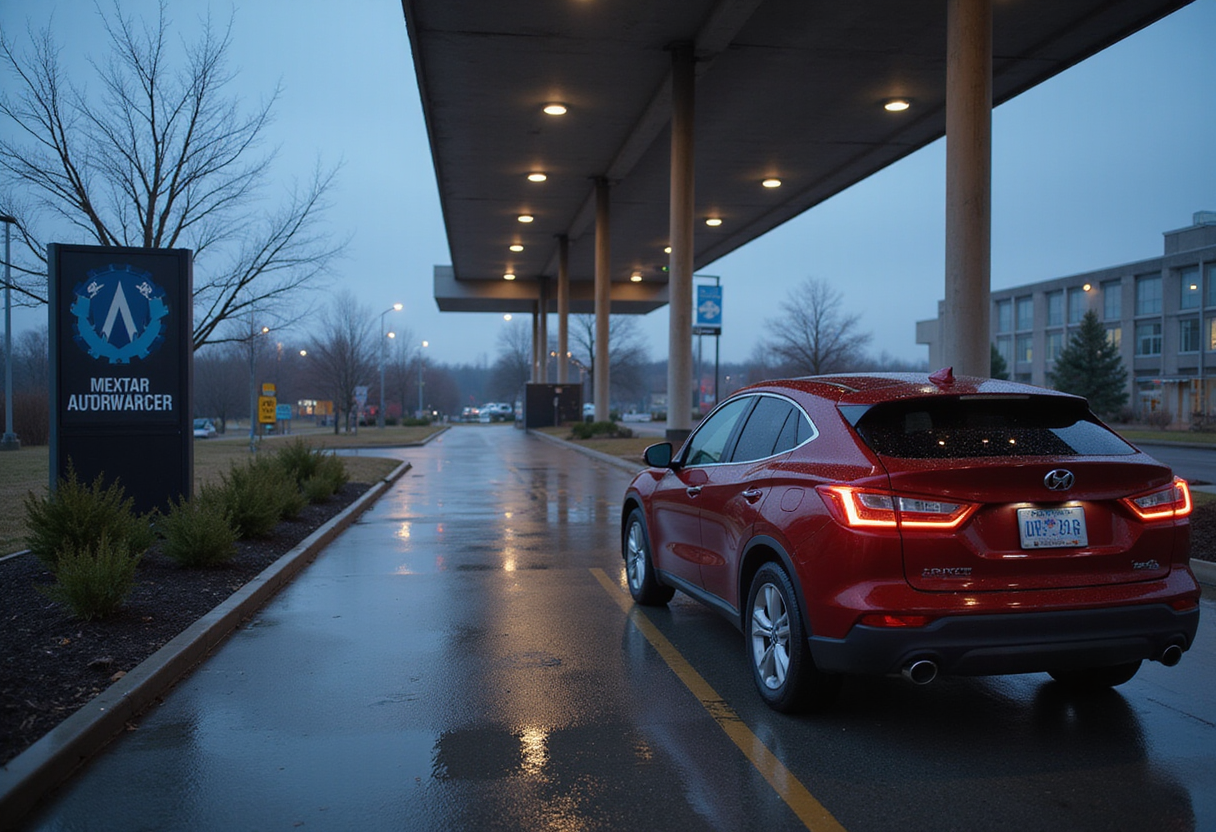
A 50% U.S. tariff threat on Canadian-assembled vehicles has steered industry strategy toward endurance rather than reaction, with Automotive News reporting that Canadian auto sector players are weighing a bid to "outlast him" — a direct reference to President Donald Trump and his administration's stated trade posture.
The headline rate would roughly double the duty cost currently applied to many Canadian vehicle imports under existing U.S. trade frameworks, and the report's framing treats the threat as a strategic inflection point for plant operators, tier-one suppliers and the cross-border production network that links the Ontario manufacturing corridor to U.S. assembly customers.
What does the 50% rate change?
At a 50% effective duty, the cost gap between a Canadian-built vehicle and its U.S.-built counterpart for the same OEM becomes wide enough to override most brand-loyalty buffers in the showroom. OEMs exporting units southbound would face three options: absorb the duty at the corporate level, pass it through to dealers and ultimately buyers, or reallocate volume to U.S. sister plants. Each route has precedent from earlier U.S. trade actions, but none has been tested against a half-rate on finished vehicles.
The supplier base absorbs pressure faster than the OEMs themselves. Tier-one suppliers running stamping, seating, lighting and powertrain content in Canada operate on contracts tied to specific Canadian assembly volumes. Tier-two and tier-three vendors face thinner margins and shorter pricing windows, meaning solvency pressure rises quickly as the duty scales. The "outlast" posture only holds if the threatened tariff does not become a sustained production-cost line item on supplier P&Ls.
Why patience rather than exit?
Multi-decade capital programs — dies, tooling, paint shops, electrification lines — do not migrate on a tariff cycle. Plants built around Canadian labor agreements, regional content rules under USMCA, and just-in-time sequencing to U.S. assembly customers cannot pivot without writing down the asset base. The strategy assumes the political shelf life of a 50% threat is shorter than the amortization tail on the equipment it would penalize.
Canadian federal and provincial authorities have signaled worker-support tools, but the policy kit does not close a 50% border cost gap. Retention programs, retraining subsidies and tariff retaliation against U.S. goods address political and labor optics rather than the underlying unit-economics problem. A half-rate duty applied to the finished vehicle moves the math faster than the support mechanisms.
What to watch next
The formal implementation path. A tariff applied through direct executive authority, without Commerce Department rulemaking, would shorten the timetable and narrow the legal avenues for industry pushback. Product-specific exclusion requests, modeled on Section 232 practice on steel and aluminum, would likely arrive on a plant-by-plant basis and could narrow the rate for specific Canadian programs. A Canadian retaliatory package, if sequenced in parallel, would reset the political calculus and either validate the patience strategy or compress its timeline. The next concrete signal will come from U.S. Commerce Department procedural filings and from any bilateral statements out of Ottawa and Washington.
via Google News: Auto industry policy (Source)
More from Daniel Okafor
Show full bio
Senior reporter covering marketplaces and e-commerce at Autoplant Brief.
176 articles
Also circulated
- 50% Tariff Threat Looms Over Canadian Auto Supply Chain
- Auto Tariffs Test Canada-U.S. Trade Deal: What Plants Are Watching
- Even a 15% U.S. Tariff Could Hit Canadian-Built Vehicles Hard
- Trump Threatens 50% Tariff on Vehicles and Parts From Canada
- US Imposes 50% Tariff on $20B in Canadian Goods; Auto Hike Looms