ECO-8364 · REV K · effective November 13, 2026
EV Manufacturing TransitionAPPROVEDEngineering notice
£1.4m UK grant backs nickel, cobalt and copper recovery push
A £1.4m Innovate UK grant funds the two-year Cascade project to recover nickel, cobalt and copper from Scotland's largest nickel prospect using ReOre's low-energy hydrometallurgy.
Scope of change
- £1.4m in UK government funding through the Battery Innovation Programme, delivered by Innovate UK
- Two-year Cascade project partners ReOre, Aberdeen Minerals and Camborne School of Mines
- Feedstock comes from the Arthrath Nickel-Copper-Cobalt Project in Aberdeenshire, the UK's largest-scale nickel prospect
- ReOre's EcoMineral hydrometallurgical process uses biodegradable, non-toxic chemistry at ambient pressure and low temperatures
- The UK currently has no facilities to extract or process nickel and cobalt into battery-suitable products
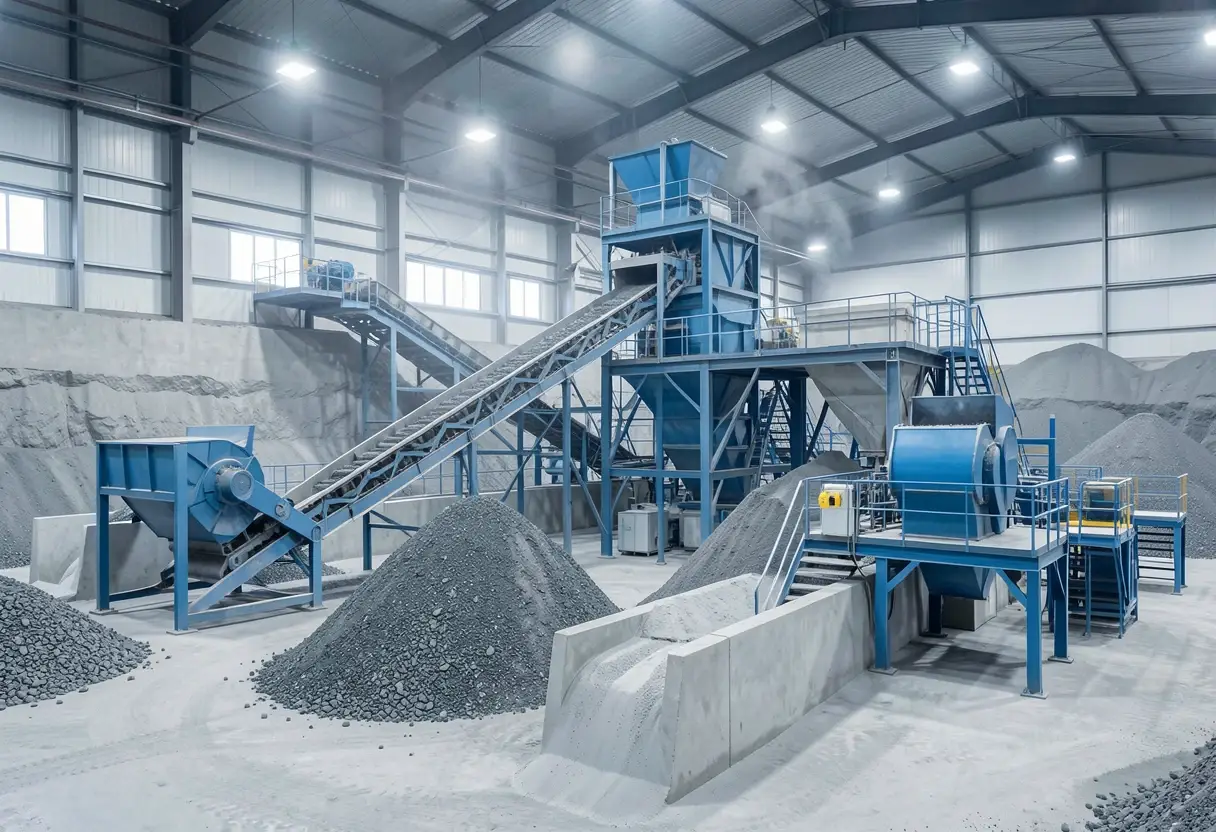
A £1.4m grant from the UK government's Battery Innovation Programme is funding a two-year project to recover nickel, cobalt and copper from a Scottish deposit that hosts the country's largest-scale nickel prospect. The money goes to ReOre, the mineral recovery arm of Altilium Group, working with explorer Aberdeen Minerals and the Camborne School of Mines on a programme called Cascade.
The funding runs through Innovate UK with backing from the Department for Business, Innovation, Science and Trade. The stated goal: cut the UK's reliance on imported battery materials and build what the partners call a sovereign battery materials supply chain. For context, the UK currently has zero facilities that extract or process these metals into battery-grade products — every kilogramme of domestic demand is, in effect, imported.
What does the project actually do?
Cascade will apply ReOre's patent-pending EcoMineral technology, a hydrometallurgical process built on biodegradable, non-toxic chemistry, to sulphide mineral concentrates from Aberdeen Minerals' Arthrath Nickel-Copper-Cobalt Project in Aberdeenshire.
Altilium claims the process runs at ambient pressure and low temperatures, avoiding the aggressive conditions of many conventional extraction routes. If those claims hold against production data, the group says the chemistry could cut energy consumption, environmental impact and processing costs in one pass.
The technology is designed to handle what the company calls "challenging feedstocks" — including end-of-life products and mine waste, not just virgin ore.
Camborne School of Mines, the project's research partner, will investigate recovery routes for nickel and cobalt in UK mine waste and other secondary feedstocks, supplying mineral processing expertise along the way.
The takeaway: this is a processing demonstration, not a mine build. Two years, £1.4m, and a proof-of-concept for a domestic refining route.
Who said what?
Toby French, Business Lead at ReOre Technologies, framed the stakes plainly: "Developing responsible domestic primary resources alongside recycling will be essential for the UK to build a resilient and competitive battery materials supply chain."
He added: "Our ambition is to demonstrate a sovereign pathway that keeps more of the critical minerals value chain here in Britain – from resource extraction and refining through to the production of high-value battery materials."
Fraser Gardiner, CEO of Aberdeen Minerals, pointed to the industrial upside: "Developing and scaling environmentally sound processing technologies for UK-sourced nickel-cobalt raw materials opens up sustainable pathways for mineral development in Aberdeenshire and elsewhere and is a crucial step to securing truly sovereign supply chains for strategic industrial sectors."
Note the wording from both men — "ambition", "pathways", "demonstrate". These are intentions, not confirmed capacity. No tonnage targets, no offtake agreements, no refinery site. The claim to verify will be whether Cascade's recovery rates justify commercial scale-up.
Why now?
The arithmetic driving this is simple. The vast majority of the world's battery material processing capacity sits in China, and governments elsewhere are racing to localise supply chains — through recycling, second-life reuse, and, as here, squeezing more out of mining operations and their waste products.
Aberdeen Minerals, which Altilium calls a leading UK nickel-cobalt explorer, has already run drilling and geophysics programmes in Northeast Scotland. Altilium says those programmes confirm the potential for high-value deposits at Arthrath. Potential, again, is the operative word.
The UK has untapped domestic nickel and cobalt prospects but no downstream capability to turn rock into battery-ready material. Cascade aims to close that gap by producing high-value products suitable for direct supply to UK industry — automotive included, but also advanced manufacturing and defence.
What to watch next
The two-year clock is already running. Watch for the first recovery-rate results from the Arthrath concentrates, any follow-on funding decision from Innovate UK, and whether Aberdeen Minerals moves Arthrath from exploration toward a mine plan.
Sovereignty, it turns out, is a chemistry problem first.
via electrive (Source)
More from Daniel Okafor
Show full bio
Senior reporter covering regulation, policy and their impact on Automotive manufacturing and vehicle production at Autoplant Brief.
337 articles
Also circulated
- Green Science Alliance opens battery recycling lab in Biel, Switzerland
- Cornwall geothermal lithium plant targets 2029 production start
- UK puts £10m behind Cornish geothermal lithium plant
- GM Builds First Production Vehicles with Fully Recycled Cathode Material
- Lohum Plans 30,000t Lithium Refining Capacity in India