ECO-3843 · REV V · effective October 13, 2026
Vehicle Plants & ProductionRELEASEDEngineering notice
Volkswagen Osnabrück plant slated for defense manufacturing switch
Volkswagen will convert its Osnabrück car plant to defense manufacturing, per Manufacturing Today — no volumes, investment or timeline disclosed yet.
Scope of change
- Volkswagen intends to convert its Osnabrück, Germany plant from auto production to defense manufacturing
- No production volumes, investment size or timeline have been disclosed in the report
- Osnabrück builds low-volume models including Porsche Boxster and Cayman under contract
- The conversion remains an announced intention, not a confirmed capacity plan
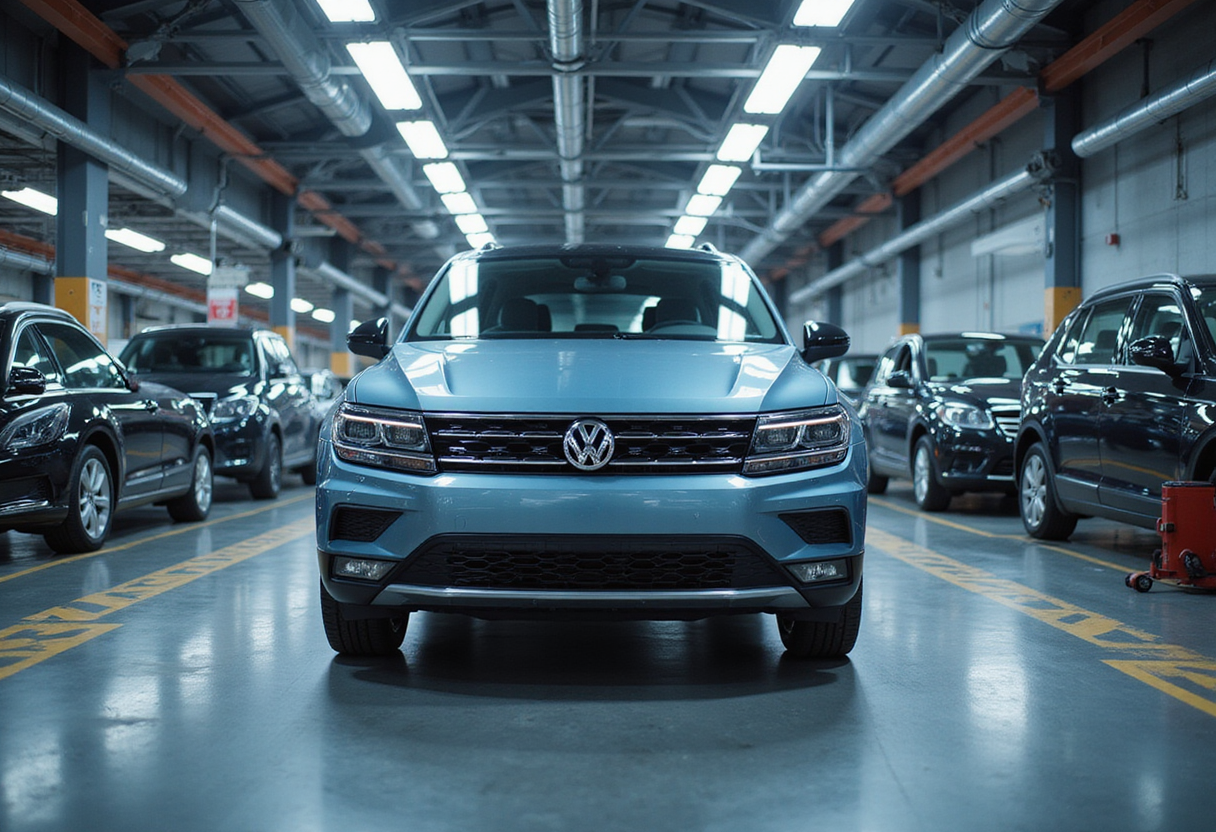
Volkswagen intends to convert its Osnabrück plant in Germany from automobile production to defense manufacturing, Manufacturing Today reports. That's the whole headline, and it's a big one: a Tier 1 OEM (vehicle maker) repurposing a passenger-car factory for arms output rather than closing it.
Details are thin. The report gives no production volumes, no investment figure, no timeline, and no statement on which defense products the site would build. Treat the conversion as an announced intention for now, not a confirmed capacity plan. Nobody at VW has yet put a number on it publicly, at least not in this report.
What we do know is the plant itself. Osnabrück has long been one of VW's most exposed German sites. It builds low-volume models — the Porsche Boxster and Cayman under contract, plus VW convertibles — and it has faced repeated review as the group cuts European capacity. A defense conversion would keep the site open while moving it off the passenger-car volume treadmill.
Why would VW do this?
European defense spending is climbing fast, and Germany is at the center of it. Chancellor Friedrich Merz has pushed to unlock hundreds of billions of euros for defense, and industrial companies across the continent are scrambling for manufacturing capacity. Automotive plants offer what defense contractors need: large halls, cranes, skilled labor, and supply-chain logistics.
Rheinmetall, Germany's largest defense contractor, has already moved into auto capacity — it took over a VW site at Osnabrück-adjacent infrastructure discussions and partnered with civilian manufacturers on military vehicles. An OEM converting its own plant, rather than selling it, is a step further.
What does this change for VW's footprint?
For Osnabrück workers, potentially a lot: defense contracts run long and could secure jobs that shrinking car output couldn't. But nothing is confirmed on headcount, and a product switch of this scale typically takes years — retooling, certification, and military procurement cycles all move slowly.
For VW's broader network, it removes a question mark. Osnabrück had no secured model allocation beyond current contracts, and conversion is an alternative to outright closure.
What to watch next
Watch for three things: a formal VW statement with investment and job figures, a named defense partner or product line, and a timeline for the end of car production at the site. Until VW confirms those, this stays an intention — a significant one, but an intention.
This report is based on a headline summary; Autoplant Brief will update as Volkswagen confirms specifics.
via Google News: Auto plant and vehicle production (Source)
More from Grace Kim
Show full bio
Staff writer covering people, launches and day-to-day practice in Automotive manufacturing and vehicle production at Autoplant Brief.
163 articles
Also circulated
- Volkswagen explores military vehicle output at Osnabrueck plant
- Volkswagen sells German plant as it shifts site to defense production
- Volkswagen in talks to build Iron Dome parts at German plant
- Germany's Auto Industry Scales Back Ambitions as Retrenchment Sets In
- Mercedes-Benz Weighs Closing Two German Plants Over Costs