ECO-4311 · REV T · effective September 26, 2026
Vehicle Plants & ProductionRELEASEDEngineering notice
Union warns Brampton plant could be trade war's first casualty
A union warns the Brampton, Ontario auto plant could be the first Canadian casualty of the trade war, with product decisions and tariff exposure now colliding.
Scope of change
- The union warns the Brampton, Ontario auto plant could be the first to fall in the trade war
- No OEM announcement of closure, job cuts, or product reallocation has accompanied the warning
- The claim is a labor-side risk assessment ahead of Canada-U.S. tariff decisions
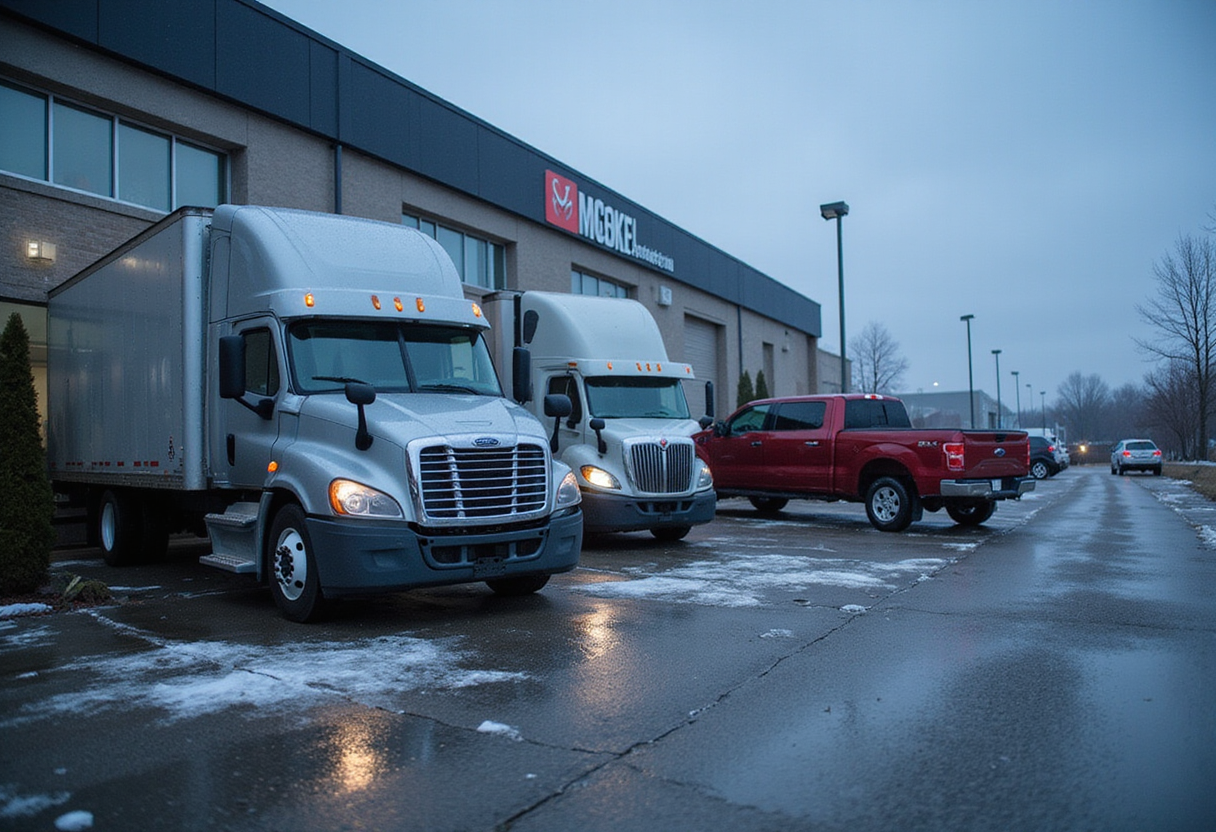
The union representing workers at the Brampton, Ontario auto plant has warned that the facility could become the first Canadian plant to fall in the ongoing trade war, according to a BNN Bloomberg report.
The warning lands at a moment when the plant's fortunes already hang on a knife-edge. Brampton Assembly has spent years in a state of program limbo, with its future dependent on investment decisions that have been repeatedly deferred. A tariff-driven downturn in North American vehicle production would remove whatever margin of safety remains.
The union's claim deserves scrutiny on two levels. First, whether the plant's product pipeline is genuinely at risk from trade policy rather than from ordinary product-cycle decisions. Second, whether Brampton's exposure is materially worse than that of other Canadian facilities that depend on cross-border parts flows and export access to the U.S. market.
On the first point, trade tensions add a new variable to a plant whose fate was already uncertain. Automakers weighing where to allocate future programs tend to avoid sites clouded by tariff risk, cost uncertainty, or the threat of retaliatory measures. A plant that was already struggling to secure a next-generation product now faces a harder argument, not an easier one.
On the second, the Canadian auto sector as a whole ships the overwhelming majority of its output to the United States. No Canadian assembly plant is insulated from tariffs. The question the union is effectively raising is sequencing: which facility loses its program first when OEMs begin rationalizing North American capacity in response to trade costs. Brampton, given its unresolved product situation, is a plausible candidate for the front of that queue.
That is a warning, not a confirmed decision. No OEM announcement of a closure, job cuts, or product reallocation at the plant accompanied the union's statement. The claim should be treated as a labor-side assessment of risk, not as evidence of a boardroom decision already taken. Union warnings in trade disputes serve a dual purpose: they flag genuine exposure, and they apply political pressure on governments to negotiate relief for the sector.
For plant-level observers, the distinction matters. A closure requires an OEM to formally announce the end of production, a wind-down timeline, and affected headcount. None of that has occurred here. What has occurred is a public statement positioning Brampton as the sector's most vulnerable asset if the trade conflict deepens.
The pressure now shifts to three arenas. Governments in Ottawa and at Queen's Park must decide whether to offer automakers incentives or tariff mitigation sufficient to keep Canadian plants competitive for future programs. The OEM must clarify, or continue to avoid clarifying, what product follows the current lineup at Brampton. And the union will likely escalate its campaign if either answer stays vague.
What to watch next: any OEM statement on Brampton's next product program, the next round of Canada-U.S. tariff decisions, and whether provincial or federal support packages for auto assembly materialize before an OEM commits capacity elsewhere.
via Google News: Auto plant and vehicle production (Source)