ECO-5536 · REV O · effective September 30, 2026
Auto Industry PolicyAPPROVEDEngineering notice
Trump Claims Tariffs Rescued US Auto Industry, Blasts Canada
President Trump says tariffs rescued U.S. auto manufacturing and calls Canada the "worst" trade abuser — claims that cut against the tariff costs OEMs and suppliers are reporting from their plants.
Scope of change
- Trump claimed tariffs rescued the U.S. automotive industry
- He called Canada the 'worst' abuser of U.S. trade arrangements
- The claim has not been substantiated by OEM capacity announcements or production data
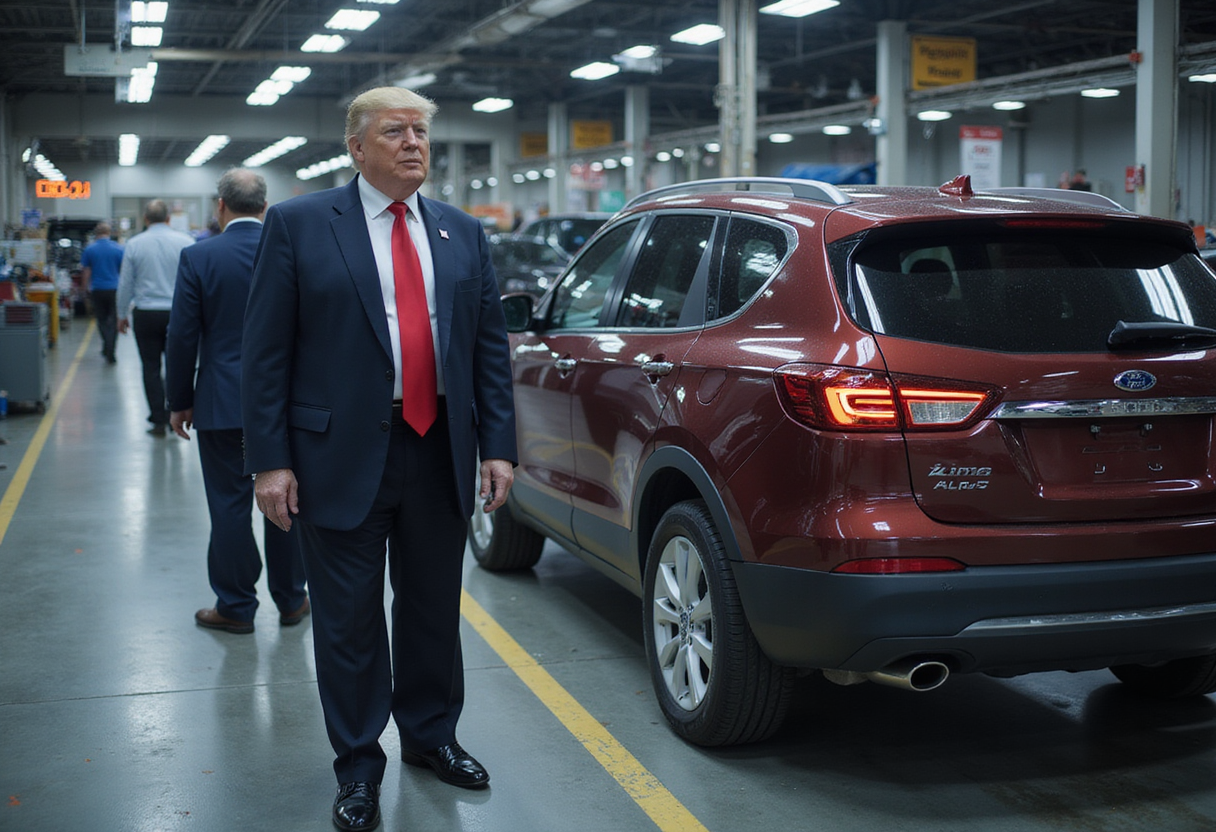
President Donald Trump has claimed that his tariff policy rescued the U.S. automotive industry, while singling out Canada as the "worst" abuser of trade arrangements with the United States.
The president's assertion puts him directly at odds with the analytical picture emerging from the plants themselves. Automakers and suppliers operating assembly lines across Michigan, Ohio, Ontario and the broader Midwest corridor have spent months absorbing the cost of tariffs on imported vehicles and parts — a burden that several OEMs have already flagged in quarterly earnings as a drag on margins rather than a catalyst for growth.
Trump's framing is straightforward: tariffs, in his telling, forced investment back into American manufacturing capacity and saved an industry he argues was in decline. Canada, he said, ranks as the most egregious case of a trading partner taking advantage of the United States — a pointed charge given how deeply integrated the two countries' auto sectors remain.
That integration is the crux of the problem for plant operators. Components routinely cross the U.S.–Canada border multiple times before a finished vehicle rolls off a final assembly line. Engines cast in one country, transmissions machined in another, wire harnesses and seats sourced from tier suppliers on both sides of the border — each crossing now carries a tariff cost under the current policy regime. Industry groups have warned that this multiplied burden hits mid-tier suppliers hardest, since they lack the pricing power of the major OEMs to pass costs downstream.
The claim that tariffs "rescued" the industry also sits uneasily alongside the sector's own numbers. Several major automakers have reported tariff-related costs running into the billions of dollars since the measures took effect, and some have cut or delayed guidance as a result. Production announcements tied directly to tariff pressure — rather than to pre-existing product programs and electrification plans — remain scarce.
What the president describes as rescue, many plant managers and procurement chiefs describe as disruption. The question for the manufacturing base is not whether tariffs changed behavior — they clearly have, in sourcing decisions, inventory strategies and pricing — but whether that change translates into sustained new U.S. assembly capacity, or simply into higher costs spread across OEMs, suppliers and consumers.
Canada's designation as the "worst" trade abuser adds a further layer of uncertainty for the dozens of cross-border supplier operations that anchor employment in Ontario's auto cluster and in adjacent U.S. states. Any escalation in rhetoric that presages new measures against Canadian-built vehicles or parts would land directly on plants in Oshawa, Windsor, Alliston and their U.S.-side counterparts in Michigan and Ohio.
For now, the president's claim stands as a political assertion, not a verified production result. No OEM has publicly credited tariffs alone for a capacity expansion, and the investment announcements the administration has pointed to largely trace to product programs planned before the current tariff regime took shape.
What to watch next: whether any automaker commits to concrete U.S. plant capacity increases explicitly tied to tariff policy, how tariff costs figure in upcoming quarterly results from the major OEMs, and whether the administration converts its rhetoric on Canada into formal trade action that would reshape cross-border supplier logistics.
via Google News: Auto industry policy (Source)
More from Amara Osei
Also circulated
- Trump Doubles Canada Auto Tariffs as Industry Warns of Competitive Hit
- New Canadian Auto Tariff Threat Puts US Automakers in Crossfire
- 50% Canada Tariff Threat Rattles Michigan Auto Plants Near Detroit
- Canadian Auto Sector Braces as Trump Floats New Tariff Threats
- U.S. and Canada Trade Blows Over Auto Tariffs