ECO-6698 · REV C · effective October 13, 2026
Quality & InspectionAPPROVEDEngineering notice
Porsche Adds AI-Enabled Robotic Paint Inspection System
Porsche is adding an AI-enabled robotic paint inspection system, per a Vision Systems Design item. Site, supplier, capex and start date are undisclosed; the item is flagged as a supplier claim pending OEM confirmation.
Scope of change
- Porsche is adding an AI-enabled robotic paint inspection system, per Vision Systems Design
- Installation site, system supplier, capital cost and commissioning date were not disclosed in the available reporting
- Major machine-vision suppliers active in the auto sector include ISRA VISION, Cognex and Keyence
- Porsche runs two main assembly plants: Zuffenhausen (911, Taycan) and Leipzig (Macan, Panamera, Cayenne)
- The item most likely traces back to a vendor or integrator press release circulated to vision-industry trade press
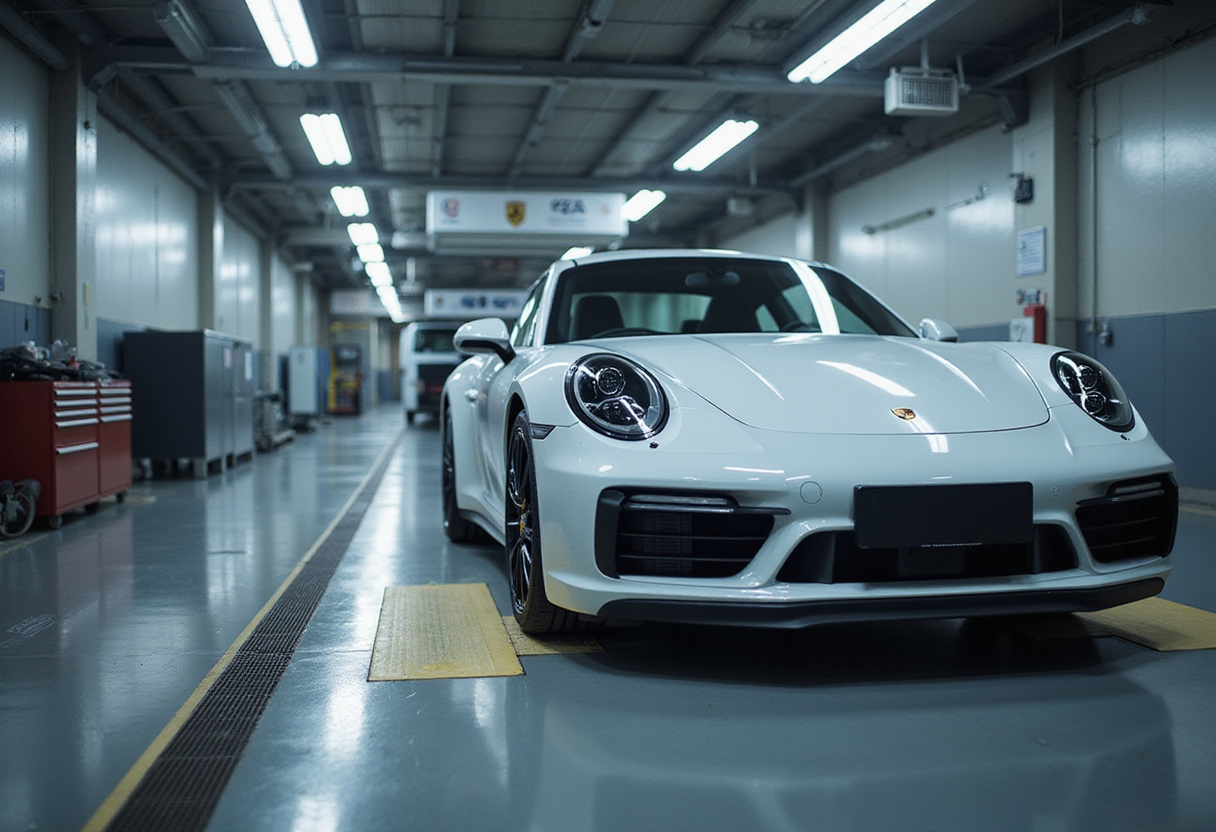
Porsche is adding an AI-enabled robotic paint inspection system to its production operations, according to a report carried by Vision Systems Design, a trade publication covering machine vision (cameras and image-processing software used to inspect parts) and imaging technology.
The installation site, system supplier, capital cost and commissioning date were not disclosed in the available reporting. The Vision Systems Design item confirms only the technology category — robot-mounted, AI-enabled paint inspection — and the OEM (original equipment manufacturer), Porsche, part of the Volkswagen Group.
What does paint inspection involve in automotive manufacturing?
Paint inspection is one of the final quality gates in a vehicle body shop. After primer, basecoat (the colour layer) and clearcoat (the transparent protective top layer) are applied, inspectors check each body for surface defects — orange peel (uneven paint texture), runs, sags, inclusions, and colour drift between adjacent panels.
Historically this work combined human visual inspection with handheld gloss and thickness meters.
Where does AI vision fit?
Robotic vision cells replace or supplement manual inspection with mounted cameras and lighting that capture each body at defined stations along the line. Machine-learning models, trained on labelled defect images, classify surfaces in real time and flag bodies that fall outside tolerance.
Similar systems have been deployed across the auto industry for nearly a decade. Suppliers active in this space include ISRA VISION (now part of Atlas Copco), Cognex, Keyence, and a number of robotics integrators.
How are paint-inspection AI cells typically integrated?
A typical cell consists of a six-axis robot (an arm with six rotational joints) carrying one or more 2D or 3D cameras, paired with structured lighting. Bodies enter the cell after clearcoat oven cure, and the robot executes a programmed path covering doors, hood, roof and side panels.
Software flags suspect regions on a dashboard for human review. In fully automatic mode, the system routes bodies to a rework station without human input.
Why does the announcement matter at Porsche specifically?
Porsche runs lower-volume premium production than mass-market OEMs. The Zuffenhausen assembly plant builds the 911 sports car and Taycan electric model; Leipzig handles the Macan, Panamera and Cayenne.
Mixed-model lines with high variant counts create wider defect-detection workloads per body than single-model plants. That operating profile is one reason AI inspection has drawn sustained interest from premium automakers.
What remains unverified in the available reporting?
Without further sourcing, Autoplant Brief cannot confirm: the supplier contracted, the number of robotic cells to be installed, the investment amount, the number of jobs affected, the exact plant or line, or whether the system will replace existing manual inspection or run in parallel.
Why a trade-press source matters here
Vision Systems Design covers the machine-vision supplier ecosystem rather than OEM assembly directly, so the item most likely traces back to a vendor or integrator press release circulated to vision-industry press. Supplier and vendor announcements, as an editorial rule, should be verified against OEM production data and on-site reporting before being treated as confirmed capacity changes.
What to watch
The next checkpoints are: an OEM-issued statement from Porsche confirming the site and timeline; supplier disclosure naming the vision-system partner and the systems integrator; any mention in Volkswagen Group quarterly reporting of capex (capital expenditure) tied to paint-shop upgrades.
via Google News: Automotive quality and inspection (Source)
More from Sophie Lindqvist
Show full bio
Correspondent covering money, funding and market shifts around Automotive manufacturing and vehicle production at Autoplant Brief.
208 articles
Also circulated
- BMW's paint AOI system reaches 50-micron defect resolution
- Queretaro Researchers Report 95.8% Accuracy on Spot Weld AI Inspection
- Daihatsu runs AI inspection of transmission parts at Shiga plant
- BMW Regensburg: a car every 57 seconds, and AI writes the inspection
- Alcatraz Founder's AI Vehicle Inspection Startup Raises $10M