Effective November 25, 2026
EV Manufacturing TransitionEngineering notice
Nio Targets $52 Billion in Battery Assets, 10,000 Swap Stations by 2030
At its 12th-anniversary tech day in Guangzhou, Nio launched NWM 3.0 smart driving and NOMI 4.0 cabin AI, targeting $52 billion in battery assets and 10,000 swap stations by 2030.
Scope of change
- Nio targets over $52 billion (350 billion yuan) in battery assets and 10,000+ swap stations by 2030
- NWM 3.0 cuts driver interventions 40% and chassis control latency 78%; filings start December
- Nio has deployed 7,500+ AI agents with 2.9 million cumulative executions
- NOMI 4.0 arrives via Cedar 2.0.0 filing in early December; Banyan and Cedar S follow in Q2 2027
- 9,896 charging/swap stations built in China as of November 25, with 130 million cumulative swaps
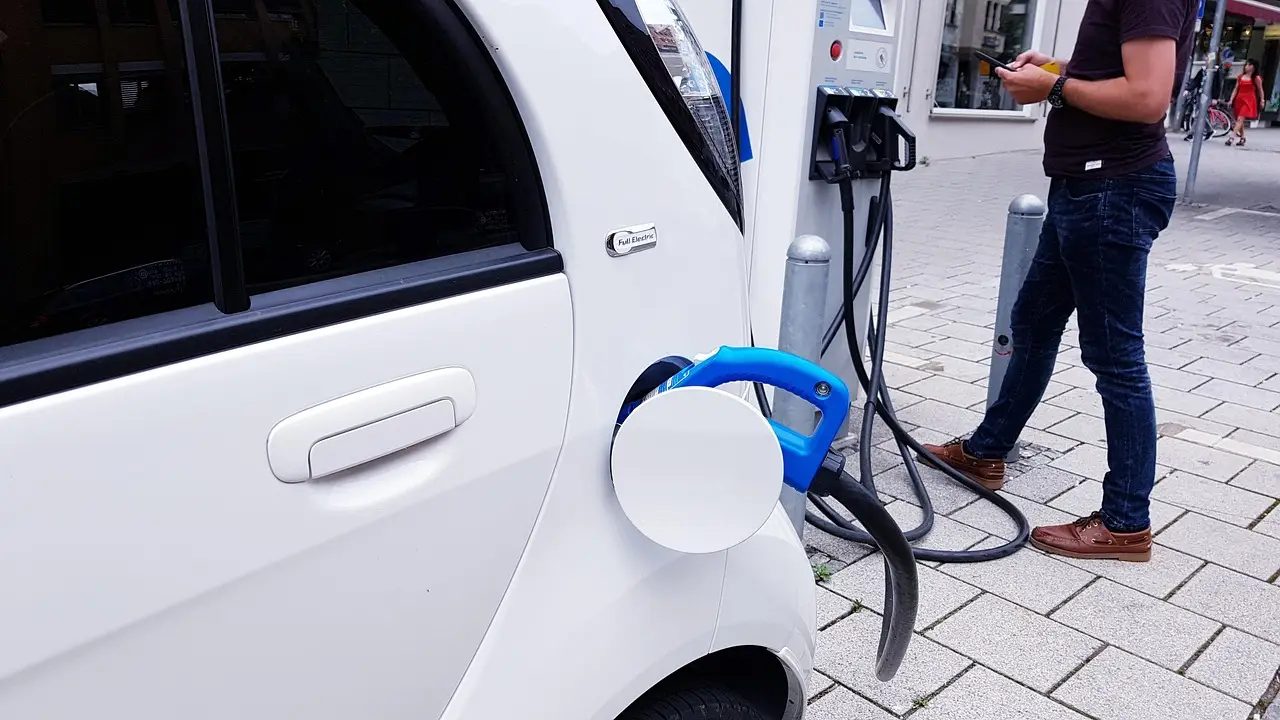
Nio wants Nio Power to manage more than 350 billion yuan ($52 billion) in battery assets and run over 10,000 battery swap stations by 2030, a target the company laid out at its third Nio IN tech day in Guangzhou on Wednesday. The event marked the Chinese EV maker's 12th anniversary and its first tech day after a one-year hiatus in 2025.
The numbers frame a bigger bet. Nio has deployed more than 7,500 enterprise AI agents — automated software workers — which have logged over 2.9 million cumulative executions across R&D, manufacturing, logistics, and user service operations. CFO and Nio Power head Stanley Qu said Nio Power also expects to provide more than 200 million annual charging and swapping services and deliver over 10 billion kWh of energy annually by 2030.
What does AI actually change for the cars?
The company launched two systems at the event: Nio World Model (NWM) 3.0, its third major smart driving iteration since debuting in July 2024, and NOMI Intelligence 4.0, an overhauled cabin system.
NWM 3.0 claims concrete gains. Ren Shaoqing, senior vice president and head of autonomous driving development, said 4D spatiotemporal compression technology cuts onboard computing resource requirements for attention by 36-fold. Vehicle-level joint optimization of algorithms, chips, and chassis control reduces chassis control latency by 78% and overall vehicle control latency by 54%.
On the training side, a dual closed-loop reinforcement learning architecture — learning from both observed and latent (inferred) data spaces — improves training efficiency fivefold over the previous generation and adds a reward model that dynamically evaluates real road conditions. Versus NWM 2.5, driver interventions drop 40%, users' sense of reassurance rises roughly 60%, and overall data volume grows sevenfold.
When do drivers get it?
Nio said system versions featuring NWM 3.0 begin regulatory filings in China in December and roll out to all users upon approval across four systems: Banyan, Cedar, and Cedar S for Nio-branded vehicles, and Coconut+ for the Onvo brand.
Cedar 2.0.0, the first release carrying NOMI 4.0, goes in for filing in early December with gradual roll-out after approval. Cedar S and Banyan systems should complete adaptation and receive the update in the second quarter of 2027, with the technology later expanding to Onvo's Coconut and Coconut+ systems.
Ted Li, senior vice president of product experience, said NOMI 4.0 breaks from traditional voice assistants that passively execute preset commands. Backed by an in-house foundation model matrix and what Nio calls the industry's first vehicle-native AI agent framework, it perceives interior and exterior environments, calls vehicle-wide tools, and autonomously plans and completes tasks.
The strategy behind the tech day
Founder, chairman, and CEO William Li said smart EVs represent the most valuable form of physical AI, with automotive becoming the largest sector for AI applications. He put the global automotive industry chain at $7–9 trillion; if AI adds 15% in value, that unlocks over $1.2 trillion in new commercial value.
Li also argued automakers must become AI-native organizations. Since 2023, Nio has restructured around 12 categories of Cell Business Units (CBUs) — spanning users, vehicles, R&D projects, components, batteries, and charging and swapping stations — under a six-layer AI-native operating architecture. Nio Power, among the first adopters, uses multiple AI agents for granular management of every battery and station.
Since January's AGI committee creation, the ramp-up has been steady. Chip subsidiary GeniTech (Shenji), spun off in June 2025, showed its NX9031 chip lineup in July, spanning smart driving, embodied intelligence, and AI agent inference. In an early September earnings briefing, Li said Nio is not only an automaker but also an AI and energy company, and that capital markets have yet to fully recognize the value of its full-stack technology.
As of November 25, Nio had built 9,896 charging and swapping stations across China — 4,285 swap stations, 5,611 charging stations, and 32,869 charging piles — with over 130 million cumulative battery swaps.
What to watch next: the 2026 Guangzhou Auto Show opens November 27, where Nio reportedly unveils a special-edition ES8. Third-quarter financial results land December 1, and Nio Day 2026 in Wuhan on December 19 brings the all-new ET5 Touring wagon. ($1 = 6.7088 yuan)
via CnEVPost (Source)
More from Grace Kim
Show full bio
Staff writer covering people, launches and day-to-day practice in Automotive manufacturing and vehicle production at Autoplant Brief.
322 articles