ECO-2962 · REV O · effective September 29, 2026
Industry Analysis & MarketsAPPROVEDEngineering notice
Mesabi Metallics Commits $18 Billion to Minnesota-to-Iowa Steel Chain
Mesabi Metallics plans $18 billion to link a Minnesota iron ore mine with a $15 billion DRI-EAF steel complex in Iowa, citing automotive and defense demand.
Scope of change
- Mesabi Metallics plans $18 billion total: $15 billion for an Iowa steelmaking complex and nearly $3 billion to complete the Nashwauk, Minn., iron ore mine.
- The Iowa project is expected to create 6,000-plus construction jobs and at least 1,750 permanent jobs; the Minnesota mine currently has 1,500 construction workers and 200 full-time staff, targeting about 350 at full operation.
- Iron ore from Minnesota will be processed into direct-reduction-grade pellets for the Iowa DRI-to-EAF complex, serving automotive, defense, shipbuilding, appliances, energy and infrastructure markets.
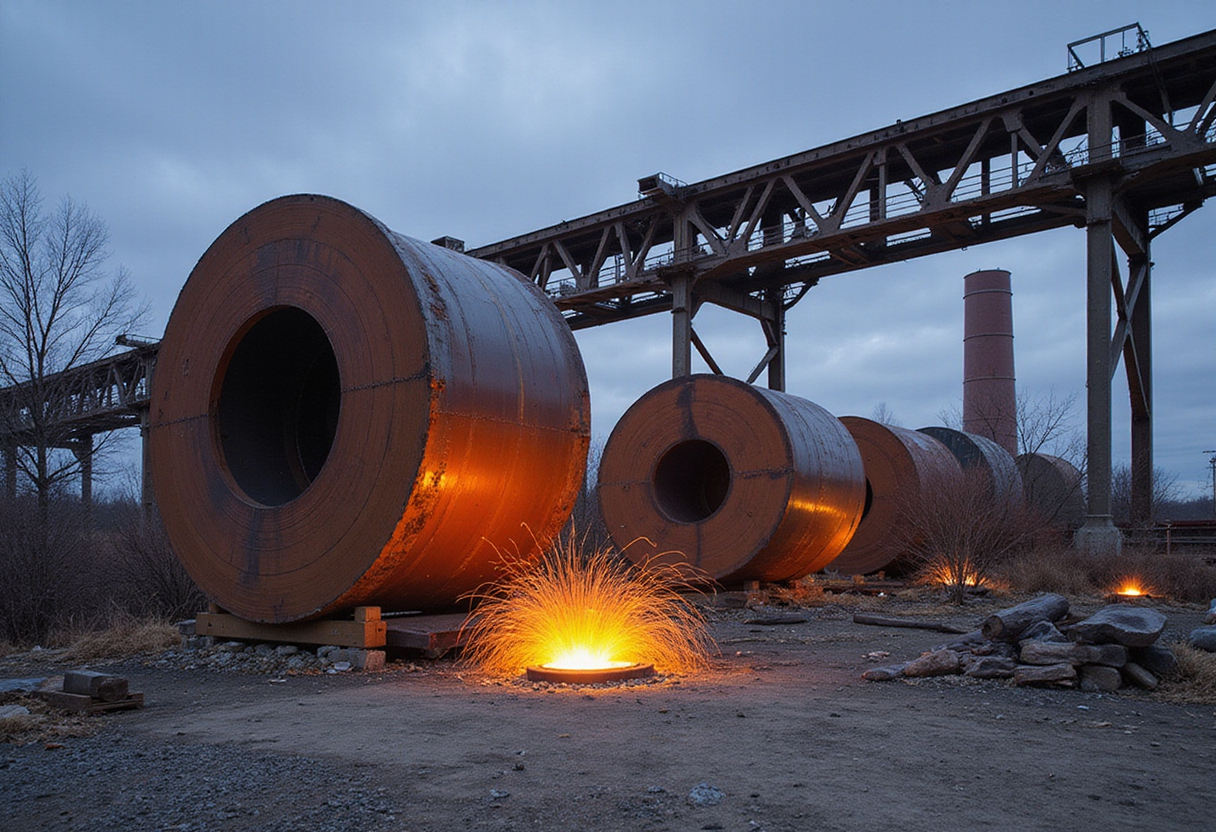
Mesabi Metallics plans an $18 billion investment to build an integrated domestic steel supply chain, linking an iron ore mine in Nashwauk, Minn., with a new steelmaking complex in Iowa. The company disclosed the figure in Des Moines, Iowa, where the downstream project would be built.
The split is uneven. The Iowa steelmaking complex carries a planned $15 billion price tag. The remaining nearly $3 billion is going to complete the Nashwauk iron ore mine, a project that already has more than 1,500 construction workers and 200 full-time employees on site. Mesabi expects the mine to employ roughly 350 people at full operation.
The Iowa complex is expected to generate more than 6,000 construction jobs and employ at least 1,750 people once operational. No commissioning date for the Iowa facility appears in the announcement.
The processing route is direct reduction. Mesabi will upgrade Minnesota ore into direct-reduction-grade pellets and ship them to Iowa, where the company plans to run what it calls the most advanced DRI-to-EAF steelmaking technology in the country. That would give U.S. buyers a mine-to-mill chain with no offshore link.
"This is a major moment for U.S. made steel, combining the highest quality direct-reduction grade iron ore pellet from Minnesota's Iron Range with the most advanced DRI to EAF steelmaking technology in Iowa to supply the high-quality, all-American steel that our national defense, cars and trucks, shipbuilding, household appliances, energy, and infrastructure depend on," said Joe Broking, CEO of Mesabi Metallics, in a statement.
Why automakers should care
Automotive is one of six end markets Mesabi names for the output, alongside defense, shipbuilding, appliances, energy and infrastructure. Flat-rolled steel from electric-arc-furnace routes has gained ground among vehicle manufacturers as OEMs push to quantify and cut embedded carbon in their supply chains, and DRI-fed EAFs are one route to lower-emissions primary steel.
The project also illustrates how reshoring pressure extends past final assembly. Tier suppliers stamping, rollforming and welding in the U.S. still depend heavily on upstream material whose origin sets the ceiling on how "domestic" a vehicle's content really is. Mine-to-mill investments of this scale determine how much of that upstream chain can actually be localized — a question procurement teams are now asking with tariffs and content rules in play.
Claims versus capacity
The $18 billion figure is an announced intention, not a confirmed build-out. Mesabi did not publish a capacity target in tonnes, a construction timeline, financing structure or customer commitments for the Iowa complex in the announcement. The Minnesota mine, by contrast, has measurable activity on the ground: an active construction workforce above 1,500 and 200 permanent staff, with a stated steady-state headcount of about 350.
For a company at Mesabi's tier — a raw-materials and primary-metals producer several steps upstream of stamping and component plants — the gap between an announced program and verified production is where the story will be decided. Steel trade publications will need the tonnage figures before treating the Iowa complex as committed capacity rather than a plan.
What to watch next
Three markers will separate this program from other announced mega-projects. First, a stated steelmaking capacity in annual tonnes for the Iowa complex — the number that lets buyers model supply. Second, a groundbreaking or construction-start date in Iowa, which would move the $15 billion from paper to capital deployed. Third, the pace of pellet output ramp at Nashwauk, since the mine must feed the DRI units if the integrated chain is to function as designed.
via bnpmedia.com (Original)
More from Amara Osei
Also circulated
- Newman Technology plans $74M expansion at Mansfield, Ohio plant
- Newman Technology Plans $74M Mansfield, Ohio Expansion
- Trump Defends Tariffs at GM's Milford Plant as Michigan Job Growth Stalls
- Tariffs, AI and Automation Are Redrawing Global Manufacturing Strategy
- GM Commits $830M to Midwest Powertrain Plants for Next-Gen Trucks