ECO-3414 · REV G · effective November 5, 2026
Suppliers & Tier-1sAPPROVEDEngineering notice
Allegro pitches single-chip 48V PMIC for steering and braking shift
Allegro MicroSystems claims up to 50% BOM savings with the industry's first single-chip 48V PMIC, plus footprint-compatible gate drivers and a magnet-free torque sensor for steering and braking.
Scope of change
- Allegro claims up to 50% bill-of-materials savings with the A81481, billed as the industry's first single-chip 48V PMIC.
- AMD89106 (12V) and AMD89186 (48V) gate drivers share footprints and register maps, letting designs port across voltages.
- The A17810 torque sensor drops magnets and shielding and computes steering angle on-chip.
- The A81481 integrates dual buck regulators, five LDOs and top-level safety diagnostics, replacing a 12V PMIC plus separate pre-regulator.
- The chips debut at electronica 2026 in Munich from 10 November 2026.
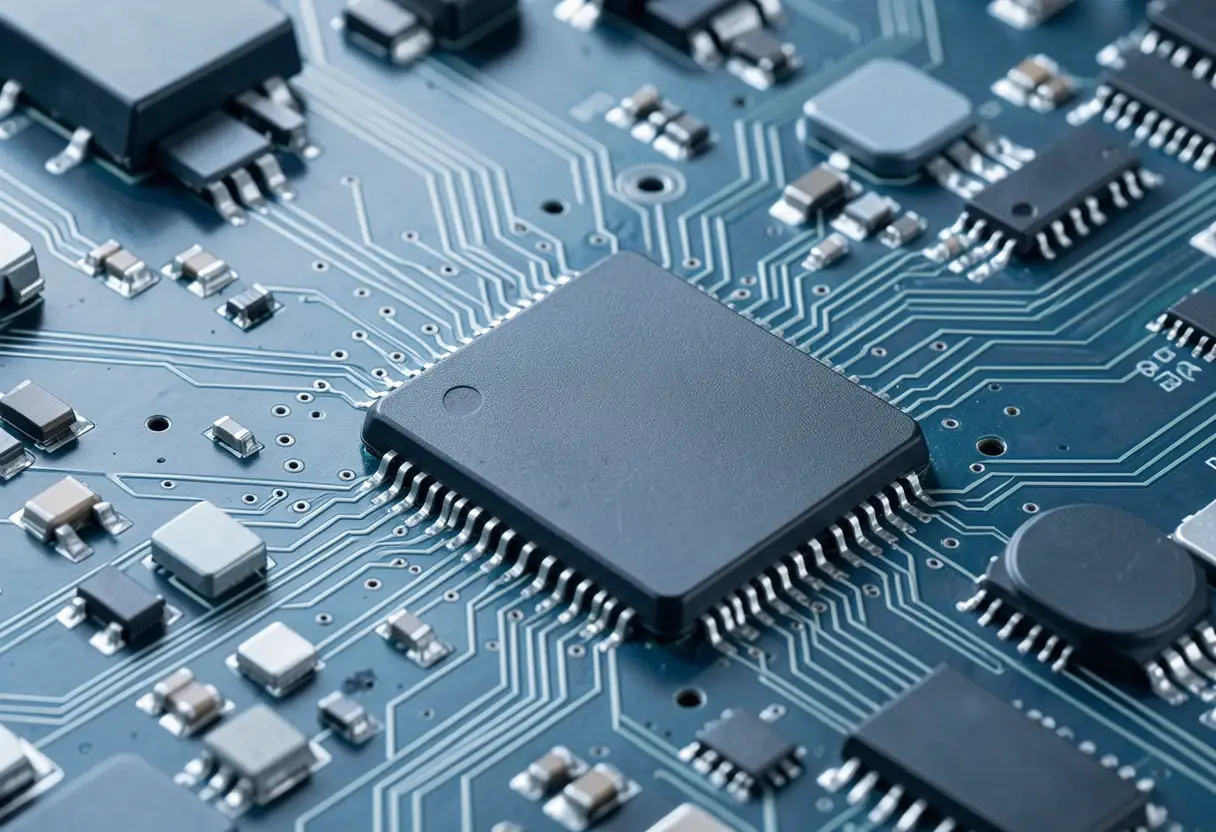
Allegro MicroSystems claims a bill-of-materials saving of up to 50% with what it calls the industry's first single-chip 48V power management integrated circuit (PMIC), aimed at steering and braking systems migrating from 12V to 48V architectures.
The New Hampshire-based chipmaker is backing the claim with two gate drivers, a magnet-free torque sensor and the A81481 PMIC, all designed so engineers can carry board layouts and software across both voltages. That reuse argument, not raw performance, is the core of the pitch.
What does the launch change for chassis designers?
It removes a design fork. The AMD89106 (12V) and AMD89186 (48V) motor gate drivers share footprints and register maps (the memory layout that software reads to configure the chip). A team developing a 12V electric power steering program can move to a 48V variant without redoing the board or rewriting control code. For Tier 1 suppliers running parallel 12V and 48V chassis programs across OEM platforms, that consolidation is where the engineering hours and cost sit.
The A17810 torque sensor takes a different route to the same problem. It drops magnets and shielding entirely, which Allegro says makes it immune to stray fields from nearby high-current electrics — a real concern in 48V zones where cabling carries four times the current for the same power. The sensor also calculates steering angle on-chip, folding another function into the device.
The A81481 PMIC replaces a 12V PMIC paired with a separate pre-regulator (a front-end stage that steps voltage down before the main regulator). It integrates:
- dual buck regulators (switching voltage converters);
- five low-dropout regulators (linear regulators for noise-sensitive loads);
- safety diagnostics rated to the top automotive integrity level, ASIL D in common industry usage.
Consolidating those blocks onto one die drives the claimed BOM reduction and shrinks the electronic control unit — a direct benefit in zonal architectures where space near actuators is scarce.
The supplier's framing
"As automakers transition to 48V zonal architectures, engineering teams cannot afford to maintain separate designs for 12V and 48V platforms," Ram Sathappan, Vice President of Global Marketing and Applications at Allegro, said. "Our footprint-compatible gate drivers, magnet-free torque sensing and the single-chip 48V PMIC bring together the power and sensing solution needed for safety-critical steering and braking systems. Automakers can now scale seamlessly from 12V to 48V chassis platforms, reuse existing software and significantly reduce electronic control unit size and BOM costs."
That is a supplier claim, and a marketing one at that. The 50% BOM figure covers the power-management section only, not the whole ECU, and it compares against a two-chip pre-regulator approach — a baseline that favors integration by construction. Design wins, not datasheets, will settle whether the savings survive contact with production programs.
What to watch next
Allegro will show the chips at electronica 2026 in Munich from 10 November 2026. The harder signal will come earlier: watch for design-award announcements with named steering and braking Tier 1s, and for production SOP timing tied to 48V chassis programs — the first OEMs to commit will determine whether footprint compatibility becomes an industry expectation or stays a differentiator.
via allegromicro.com (Original)
More from Marcus Bennett
Show full bio
News editor covering regulation, policy and their impact on Automotive manufacturing and vehicle production at Autoplant Brief.
260 articles